
ANPR and Intelligent Transportation Vision
Industrial Camera Applications in License Plate Recognition
ANPR and Intelligent Transportation Vision
From high-speed license plate recognition to speed enforcement and roadside intelligent perception — industrial cameras are becoming the core vision unit of intelligent transportation systems.
Introduction
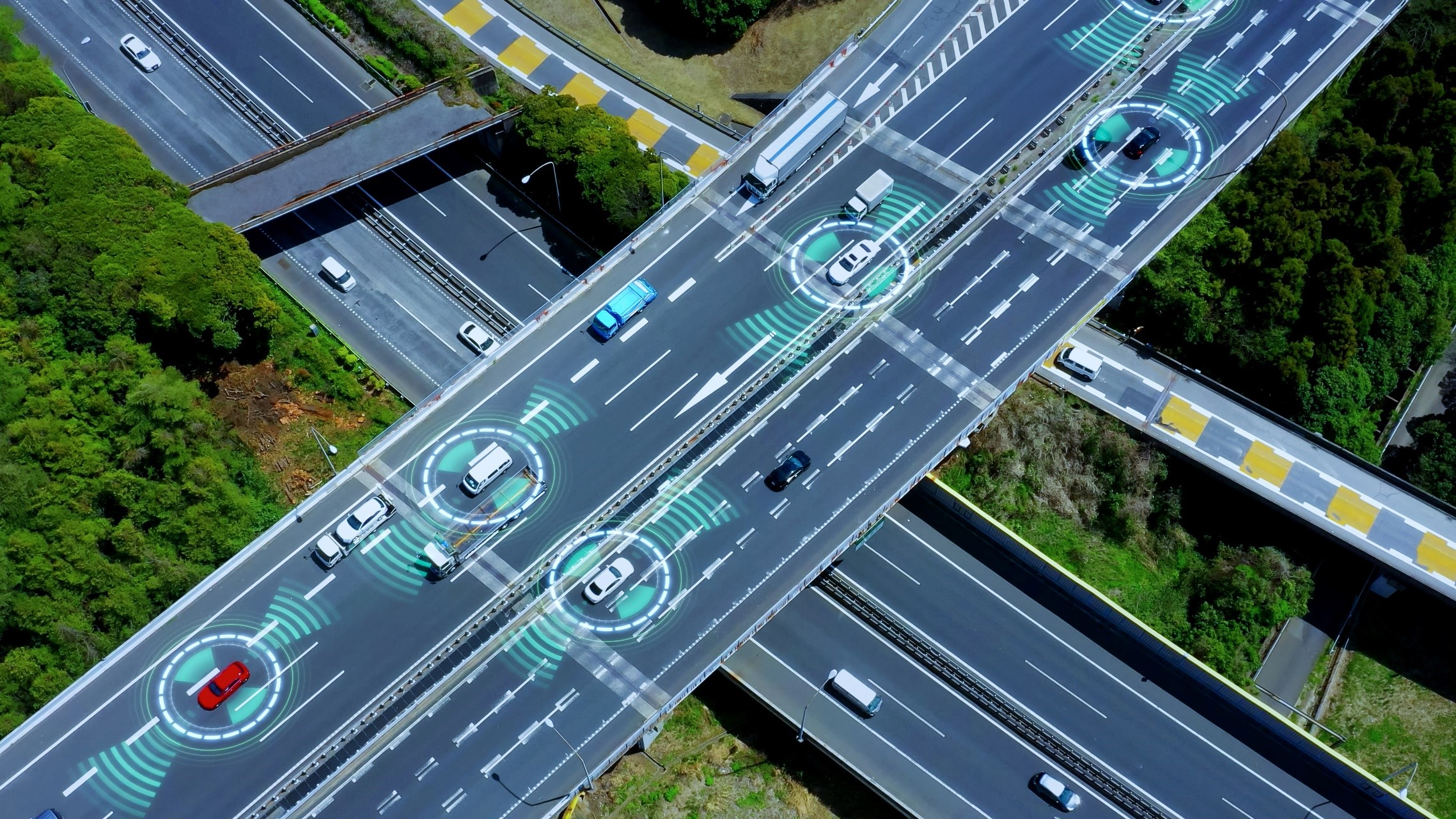
On an urban expressway, an industrial camera mounted on a gantry is capturing passing vehicles at 120 frames per second, completing license plate recognition, comparison, and recording within 50 milliseconds of the vehicle passing. At the same time, a roadside speed enforcement system is precisely locating and photographing speeding vehicles, while a smart camera installed at an intersection is detecting traffic flow and queue length in real time.
Behind these scenes is a common technological foundation — the industrial camera. ANPR (Automatic Number Plate Recognition) and Intelligent Transportation Systems (ITS) impose unique requirements on camera resolution, frame rate, shutter type, spectral response, and environmental protection. Unlike machine vision on factory production lines, traffic vision systems must operate reliably under all-weather, all-lighting conditions — from noon glare to nighttime low light, from clear skies to heavy rain, from -40°C northern winters to 70°C desert summers.
The global intelligent transportation market is growing rapidly. As countries impose increasingly strict requirements on road safety and traffic management, the deployment scale of ANPR and traffic enforcement systems continues to expand. This guide focuses on the core applications of industrial cameras in ANPR, speed enforcement, and intelligent transportation, systematically explaining the complete knowledge map from technical principles and selection key points to system integration.
1. How ANPR Systems Work and What Cameras Need
1.1 What Is ANPR?
ANPR (Automatic Number Plate Recognition) is a technology that uses industrial cameras and image processing algorithms to automatically recognize vehicle license plates. It is widely used in traffic enforcement, parking management, toll stations, highway monitoring, and urban traffic management.
Typical ANPR System Workflow:
- Vehicle detection: detecting vehicle arrival via induction loop, radar, or video trigger
- Image capture: industrial camera captures images when the vehicle passes
- Plate localization: algorithm locates the license plate region in the image
- Character segmentation: segmenting individual characters on the plate
- Character recognition: OCR algorithm recognizes each character
- Data comparison: comparing against databases (e.g., stolen vehicles, blacklists)
- Record archiving: saving images and recognition results for enforcement or statistics
1.2 Core Requirements of ANPR for Industrial Cameras
| Requirement | Technical Specification | Reason |
|---|---|---|
| Resolution | 2-5MP (single plate); 5-12MP (multi-lane) | Plate characters need sufficient pixels (character height ≥15-20 pixels) |
| Frame Rate | 30-120 fps | High-speed vehicles require multi-frame capture to ensure at least one clear frame |
| Shutter Type | Global shutter | Eliminates motion blur and geometric distortion |
| Exposure Time | ≤1ms (≤0.2ms for high-speed) | Freezes vehicle motion |
| Spectral Response | Visible + NIR | Nighttime requires infrared illumination |
| Interface | GigE / 10GigE | Multi-camera synchronization and long-distance transmission |
| Protection Rating | IP67 | All-weather outdoor operation |
| Operating Temperature | -40~70°C | Extreme climate conditions |
MindVision Solution: MindVision provides camera for ANPR traffic enforcement, covering 2MP to 12MP resolutions with a wide range of global shutter models, supporting GigE cable length limitation (up to 100m), suitable for traffic monitoring camera with license plate recognition.
1.3 Common ANPR System Integration Issues
| Issue | Cause | Solution |
|---|---|---|
| Camera not recognized by computer | Driver not installed or IP misconfigured | Refer to industrial camera driver installation guide and camera not recognized by computer |
| Frame rate too low | Insufficient bandwidth or improper exposure settings | Refer to frame rate too low industrial camera and how to calculate frame rate for camera |
| Trigger signal not working | Trigger wiring or software configuration error | Refer to camera trigger signal not working |
| High image latency | Network configuration or processing chain too long | Refer to how to reduce camera latency in vision system |
MindVision Solution: MindVision provides a complete industrial camera driver installation guide and SDK documentation to help quickly troubleshoot common issues such as GigE camera not detected troubleshooting and USB3 camera bandwidth limitation fix.
2. Selection Key Points for License Plate Recognition Cameras
2.1 Resolution Calculation: How Many Pixels Does a License Plate Need?
License plate recognition resolution requirements depend on the plate size in the image. Taking a standard Chinese blue plate as an example (440mm × 140mm), character height is approximately 90mm.
Calculation Example:
- Plate width: 440mm
- Required character height: 20 pixels
- Character height: 90mm
- Pixel pitch = 90mm / 20 = 4.5mm/pixel
- Required horizontal pixels for plate = 440 / 4.5 ≈ 98 pixels
- However, considering plate tilt, dirt, and uneven lighting, pixel pitch ≤2mm/pixel is recommended
- Then horizontal pixels for plate = 440 / 2 = 220 pixels
Practical Selection:
| Application | Recommended Resolution | Note |
|---|---|---|
| Single-lane ANPR | 2MP (1920×1080) | Covers 1 lane, plate occupies ~200 pixels wide |
| Dual-lane ANPR | 5MP (2592×1944) | Covers 2 lanes |
| Multi-lane/panoramic | 12MP+ | Covers 3-4 lanes, simultaneously captures vehicle features |
2.2 Matching Frame Rate with Vehicle Speed
High-speed vehicles pass through the field of view in an extremely short time, requiring sufficient frame rate to ensure at least one clear frame.
Calculation Example:
- Vehicle speed: 120km/h = 33.3m/s
- Field of view width: 4m (covers one lane)
- Vehicle passing time = 4 / 33.3 = 0.12s = 120ms
- At 30fps (frame interval 33ms), approximately 3-4 frames can be captured
- At 60fps, approximately 7 frames — more reliable
Recommendation:
| Speed Range | Recommended Frame Rate | Exposure Time |
|---|---|---|
| <60km/h | 30fps | ≤1ms |
| 60-120km/h | 60fps | ≤0.5ms |
| >120km/h | 120fps | ≤0.2ms |
2.3 Global Shutter: A Mandatory Requirement for ANPR
Why must ANPR use a global shutter?
Rolling shutter exposes line by line. When vehicles move at high speed, it produces a "jello effect" — license plate characters deform and skew, significantly reducing OCR recognition rates. Global shutter exposes all pixels simultaneously, completely eliminating motion distortion.
MindVision Solution: MindVision provides Sony IMX174 global shutter cameras, Sony IMX273 sensor camera specifications, and other global shutter models, suitable for global shutter vs rolling shutter for inspection scenarios. For comparison and selection of rolling shutter camera for industrial use, refer to the rolling shutter vs global shutter camera technical note.
2.4 Lens Selection: Seeing the Plate Clearly
ANPR lenses must be selected based on working distance and field of view. Use a lens focal length calculator for machine vision or how to calculate focal length of a lens tool for quick calculation.
Focal Length Calculation Formula:
f = (Working Distance × Sensor Width) / Field of View Width
Example:
- Working distance: 10m (gantry height)
- Field of view width: 4m (one lane)
- Sensor width: 1/1.8" ≈ 7.2mm
- Focal length = (10000 × 7.2) / 4000 = 18mm
Recommended Lens Types:
| Lens Type | Application | Feature |
|---|---|---|
| Fixed focal length | Fixed working distance ANPR | High image quality, low distortion |
| Varifocal lens for machine vision | Occasions requiring adjustable FOV | Flexible but slightly lower optical quality |
| Telecentric lens for measurement applications | High-precision plate measurement | Eliminates perspective error |
| M42 lens for industrial camera | Large-format sensors | High resolution, fits large sensors |
| CS-mount lens for machine vision | Compact ANPR cameras | Saves installation space |
MindVision Solution: MindVision provides C-mount vs CS-mount lens for machine vision selection guidance and a lens focal length calculator for machine vision tool, helping ANPR projects quickly calculate focal length.
2.5 Lens Resolution Matching: MTF and Pixel Size
Lens resolution must match camera pixel size. Key concepts include what is modulation transfer function MTF and LP/mm and pixel size relationship.
Matching Formula:
Lens Object-Side Resolution = 2 × Pixel Size / Magnification
For fundamentals such as what is pixel size in camera and what is sensor pixel size, refer to MindVision technical documentation.
3. Speed Enforcement: How Industrial Cameras Achieve Precise Speed Measurement and Capture
3.1 Speed Measurement Principles
Speed enforcement systems typically use two technical approaches:
Radar Speed Measurement + Camera Capture
Radar detects vehicle speed. When speed exceeds the threshold, the camera is triggered to capture. The camera must complete exposure and image acquisition in an extremely short time to ensure the license plate is clearly readable.
Video Speed Measurement (Trajectory Analysis)
By tracking vehicle position across consecutive frames and calculating displacement over known time intervals, speed is derived. This method does not require radar but needs a camera with high frame rate and precise timestamps.
3.2 Special Camera Requirements for Speed Enforcement
| Requirement | Technical Specification | Reason |
|---|---|---|
| High Frame Rate | ≥60fps | Video speed measurement requires sufficient frames for trajectory calculation |
| Short Exposure | ≤0.2ms | Freezes high-speed vehicles |
| Precise Timestamp | μs-level | Speed calculation depends on precise time intervals |
| Hardware Trigger | Supported | Synchronization with radar/induction loop |
| Global Shutter | Mandatory | Eliminates motion distortion |
| Wide Dynamic Range | ≥100dB | Handles backlight, tunnel exits, etc. |
MindVision Solution: MindVision provides global shutter cameras required for speed enforcement camera system, supporting how to adjust exposure time on industrial camera and how to adjust gain on machine vision camera, ensuring clear images in high-speed scenarios. To adjust how to set camera ROI for higher frame rates, the SDK provides complete ROI configuration interfaces.
3.3 Speed Enforcement at Night and in Adverse Weather
Nighttime and adverse weather are the biggest challenges for speed enforcement. Visible light cameras require longer exposure in low light, but longer exposure causes motion blur. Solutions include:
- Infrared illumination: using 850nm or 940nm infrared LED illumination with NIR-enhanced cameras
- Strobe lighting: instantaneous high-intensity pulses with short exposure
- Thermal cameras: detecting vehicle heat signatures in complete darkness or fog
MindVision Solution: MindVision provides camera for low-light industrial inspection and camera for NIR imaging, suitable for nighttime speed enforcement and extreme environments such as camera for high-temperature industrial inspection. Combined with UV/IR cut filter for industrial camera, ambient light interference can be effectively filtered out.
4. Traffic Monitoring and Flow Detection
4.1 Traffic Flow Detection
Intelligent transportation systems require real-time detection of traffic flow, vehicle speed, lane occupancy, and queue length. Industrial cameras implement these functions through video analysis algorithms, replacing traditional induction loops.
Typical Detection Tasks:
- Vehicle flow statistics (by vehicle type)
- Average speed detection
- Lane occupancy
- Queue length
- Traffic incident detection (stopping, wrong-way driving, congestion)
4.2 Camera Configuration for Multi-Lane Monitoring
| Number of Lanes | Recommended Camera Configuration | Note |
|---|---|---|
| 1-2 lanes | Single 5MP camera | Covers all lanes |
| 3-4 lanes | 2× 5MP cameras or 1× 12MP camera | Consider mounting height and angle |
| 4+ lanes | Multi-camera stitching | Each camera covers 1-2 lanes |
MindVision Solution: MindVision provides camera solutions related to machine vision for logistics automation and machine vision for rail inspection, supporting multi-camera synchronization and how to synchronize multiple cameras. For line scan vs area scan camera selection, traffic monitoring typically prioritizes area scan cameras.
4.3 Interface Selection: GigE vs 10GigE
| Interface | Bandwidth | Max Cable Length | Application |
|---|---|---|---|
| GigE | ~125 MB/s | 100m | Single or few cameras, standard ANPR |
| 10GigE | ~1 GB/s | 100m (fiber) | Multi-camera, high resolution, high frame rate |
| USB3.0 | ~400 MB/s | 5m | Short distance, temporary deployment |
| CoaXPress | ~1.25 GB/s | 100m | Ultra-high-speed, high resolution |
| 5GigE | ~625 MB/s | 100m | Medium bandwidth, balanced cost and performance |
MindVision Solution: MindVision provides GigE vs USB3 vs CoaXPress camera interface comparison and selection guide, as well as 10GigE camera interface guide and 5GigE camera interface guide, helping transportation projects choose the right interface. For what is GigE Vision protocol and USB3 Vision bandwidth limitations, refer to MindVision technical white papers.
4.4 Camera Applications in Special Traffic Scenarios
Beyond standard ANPR and speed enforcement, industrial cameras have multiple special applications in transportation:
| Application | Recommended Camera Type | Key Technology |
|---|---|---|
| Aerial traffic inspection (camera for drone inspection) | Compact global shutter camera | Lightweight, low power |
| Underwater tunnel inspection (camera for underwater inspection) | Waterproof industrial camera | IP68 protection, corrosion resistant |
| Rail transit inspection (machine vision for rail inspection) | High-frame-rate line scan camera | High-speed acquisition, vibration resistant |
| Laser beam analysis (camera for laser beam analysis) | High-resolution area scan camera | Beam profile measurement |
| 3D scanning and metrology (camera for 3D scanning and metrology) | Structured light 3D camera | Point cloud generation, dimension measurement |
5. Environmental Adaptability and Protection Design
5.1 Challenges of Outdoor Environments
Traffic vision systems are deployed outdoors and face the following challenges:
| Environmental Factor | Impact | Countermeasure |
|---|---|---|
| Extreme temperature | -40~70°C | Wide-temperature industrial cameras, heating/cooling housings |
| Rain/humidity | Lens fogging, circuit short | IP67 protection, anti-fog lens, sealed housing |
| Dust | Lens contamination | Air curtain purge, regular cleaning |
| Vibration | Image shake | Rigid brackets, global shutter |
| EMI | Image noise | Shielded cables, ferrite chokes |
| Direct sunlight | Overheating, glare | Sun shield, wide dynamic range |
5.2 The Importance of Wide Dynamic Range (HDR)
In traffic scenarios, backlight (e.g., vehicles exiting tunnels) and strong reflections (e.g., direct sunlight on plates) are common challenges. Wide dynamic range (WDR/HDR) cameras can capture both bright and dark details simultaneously, avoiding plate overexposure or underexposure.
Recommended Specification: WDR ≥ 100dB
MindVision Solution: MindVision provides camera for high-temperature industrial inspection and camera for low-light industrial inspection, covering wide operating temperature ranges and IP67 protection ratings. For special spectral requirements such as camera for UV fluorescence imaging and bandpass filter for fluorescence imaging, MindVision also offers corresponding solutions.
6. System Integration and Multi-Camera Synchronization
6.1 Multi-Camera Synchronization in Transportation Systems
Transportation systems often require multiple cameras to work together — for example, a panoramic camera detects vehicle position, a close-up camera captures the license plate, and a side-view camera records vehicle features. Multi-camera synchronization requires:
- Hardware trigger synchronization: all cameras start exposure from the same trigger signal
- Timestamp alignment: each image carries a precise timestamp
- Global shutter: avoids time differences caused by rolling shutter
6.2 Common Issues in System Integration
| Issue | Cause | Solution |
|---|---|---|
| Trigger desynchronization | Inconsistent trigger signal delay | Use hardware trigger, ensure all cameras share the same trigger source |
| Dropped frames | Insufficient bandwidth or improper network configuration | Enable Jumbo Frame, use industrial switches, increase buffers |
| Low plate recognition rate | Uneven lighting, dirty plates | Optimize lighting, use HDR, add multi-frame fusion |
| Communication latency | Interface protocol mismatch | Choose cameras supporting the traffic controller's native protocol |
MindVision Solution: MindVision cameras support Power over Ethernet camera setup and GigE cable length limitation, providing hardware trigger and timestamp functions. If you encounter why is my industrial camera dropping frames, refer to the Jumbo Frame configuration guide in the SDK documentation. For how to fix blurred image from machine vision camera, refer to the exposure time adjustment and lighting optimization guide.
6.3 Smart Cameras in Traffic Edge Computing
For scenarios requiring real-time license plate recognition and traffic incident detection, MindVision smart camera with built-in image processing (MV-ITA/ITAE series) can run AI inference directly on the camera, reducing data transmission latency. For smart camera vs PC-based vision system comparison, refer to MindVision selection guide.
For embedded transportation devices, MindVision provides MIPI CSI-2 camera for NVIDIA Jetson and MIPI CSI camera interface explained technical support, as well as GMSL vs FPD-Link camera interface selection guidance.
7. Typical Application Quick Reference Table
| Application | Recommended Camera Type | Key Specs | Recommended Lens/Lighting |
|---|---|---|---|
| Single-lane ANPR | 2MP global shutter camera | 60fps, ≤0.5ms exposure | Fixed focal lens + IR illumination |
| Multi-lane ANPR | 5-12MP global shutter camera | 30-60fps, WDR≥100dB | Varifocal lens + strobe light |
| Speed enforcement | High-frame-rate global shutter camera | ≥60fps, μs-level timestamp | Fixed focal lens + radar sync |
| Traffic flow detection | 5MP global shutter camera | 30fps, hardware trigger | Fixed focal lens + ambient light |
| Nighttime monitoring | NIR-enhanced camera | High sensitivity, low noise | IR illumination + large aperture lens |
| Tunnel/backlight | HDR camera | WDR≥120dB | Wide dynamic lens + sun shield |
| Multi-camera sync | Global shutter camera | Hardware trigger, timestamp | — |
| Aerial traffic inspection | Compact global shutter camera | Lightweight, low power | Wide-angle lens |
| Underwater tunnel inspection | Waterproof industrial camera | IP68, corrosion resistant | Waterproof lens |
| Rail transit inspection | High-frame-rate line scan camera | High-speed acquisition, vibration resistant | Line scan lens + bar light |
8. Frequently Asked Questions
Single-lane ANPR: 2MP (1920×1080); dual-lane: 5MP (2592×1944); multi-lane or panoramic: 12MP+. The key is that plate characters occupy sufficient pixels — character height at least 15-20 pixels.
Rolling shutter exposes line by line. When vehicles move at high speed, it produces a "jello effect," causing plate character deformation and significantly reducing OCR recognition rates. Global shutter exposes all pixels simultaneously, completely eliminating motion distortion.
Nighttime requires infrared illumination (850nm or 940nm) with NIR-enhanced cameras. Strobe lighting with short exposure can also be used. Thermal cameras can detect vehicle heat signatures in complete darkness.
Video speed measurement: ≥60fps recommended; high-speed scenarios (>120km/h): 120fps recommended. The key is that the frame rate ensures at least 5-7 frames are captured while the vehicle passes through the field of view.
Use a hardware trigger signal to simultaneously start exposure on all cameras, ensuring each image carries a precise timestamp. A global shutter is mandatory; rolling shutter introduces inter-line time differences, causing synchronization errors.
IP67 protection rating recommended, with operating temperature range -40~70°C. Equipped with sun shield, anti-fog lens, and sealed housing to handle rain, dust, and extreme temperatures.
Optimize from four levels: (1) Lighting — use IR illumination or strobe to ensure uniform brightness on the plate area; (2) Lens — choose low-distortion fixed focal lenses for clear plates; (3) Camera — global shutter, wide dynamic range, sufficient resolution; (4) Algorithm — multi-frame fusion, deep learning OCR.
Common causes and solutions: (1) Jumbo Frame not enabled — enable in NIC settings, set MTU to 9000+; (2) NIC buffer too small — increase receive buffers; (3) Insufficient bandwidth — reduce resolution or frame rate, or upgrade to 10GigE interface; (4) Network latency — use industrial switches.
Formula: Minimum Frame Rate = Production Speed ÷ Field of View × Safety Factor (typically 3). Example: vehicle speed 120km/h (33.3m/s), FOV 4m, minimum frame rate = 33.3 ÷ 4 × 3 ≈ 25fps. Practically, 60fps+ is recommended for multi-frame capture.
Traffic monitoring typically prioritizes area scan cameras because vehicles pass discretely, and area scan cameras can fully capture each vehicle's image. Line scan cameras are suitable for continuously moving objects (e.g., products on a conveyor) and are mainly used in traffic scenarios for road surface inspection or continuous pavement scanning.
9. Summary: The Core Value of Industrial Cameras in Intelligent Transportation
From ANPR to speed enforcement to traffic flow detection, industrial cameras are becoming the core perception unit of intelligent transportation systems. Unlike factory machine vision, traffic vision systems impose unique requirements on cameras:
- All-weather operation — from -40°C to 70°C, from clear skies to heavy rain, from noon glare to nighttime low light.
- High-speed capture — global shutter, short exposure, high frame rate, ensuring clear images of high-speed vehicles.
- Precise synchronization — multi-camera hardware trigger synchronization, μs-level timestamps, ensuring accurate speed measurement and trajectory analysis.
- Intelligent recognition — OCR, deep learning, multi-frame fusion, maintaining high recognition rates under complex conditions.
For intelligent transportation projects, industrial camera selection should not start with "how many megapixels," but rather follow this logic:
Application Scenario → Vehicle Speed Range → Resolution Requirement → Frame Rate & Exposure → Shutter Type → Spectral Response → Interface & Protection
Whether you are building an ANPR system, speed enforcement equipment, or an urban traffic monitoring platform, choosing the right industrial camera and vision solution is the critical first step to project success. MindVision provides full-process support from industrial camera selection to machine vision system integration, helping transportation customers build reliable and efficient intelligent transportation vision systems.
About MindVision
MindVision is a leading Chinese industrial camera manufacturer founded in 2013, with R&D and production bases in Shenzhen, Changsha, and Wuxi. With nearly 300 employees and over 100 patents and software copyrights, MindVision's product line covers resolutions from 0.3 MP to 410 MP, frame rates from 30 fps to over 1000 fps, and spectral ranges spanning visible, UV, NIR, SWIR, and thermal infrared.
For intelligent transportation and ANPR applications, MindVision provides:
- Area scan industrial cameras: full GigE, USB3.0, and 10GigE interfaces, with a wide range of global shutter models, suitable for ANPR, speed enforcement, and traffic monitoring
- NIR-enhanced cameras: suitable for nighttime license plate recognition and low-light traffic monitoring
- HDR cameras: wide dynamic range ≥100dB, suitable for tunnel exits, backlight, and complex lighting scenarios
- Thermal cameras: suitable for vehicle detection in complete darkness or fog
- Smart cameras (X86 architecture): MV-ITA/ITAE series with Intel processors, supporting onboard AI inference, capable of running license plate recognition algorithms directly on the camera for edge deployment
- Complete SDK support: C/C++, Python, Halcon, VisionPro language packages, supporting PC Linux and ARM Linux embedded deployment
From a single camera to a complete intelligent transportation vision system, MindVision provides end-to-end selection support and technical services for ANPR, speed enforcement, and traffic monitoring applications. As an experienced machine vision system integrator, MindVision's engineering team can assist customers throughout the entire process from industrial camera selection to system deployment.
#MindVision
MindVision Technology Co., Ltd. is a professional domestic industrial camera manufacturer headquartered in Shenzhen, with production centers and R&D bases in Changsha (Hunan) and Wuxi (Jiangsu), employing nearly 300 people. Its product portfolio covers area-scan cameras, line-scan cameras, thermal imaging cameras, and stereo camera modules, with over 100 patents and software copyrights. The company is ISO9001 certified.
For more information or free selection consulting, please visit MindVision's official website or contact the sales team.
We’ll be glad to help you
Please Login
Full Name
Company Name
E-mail*
Country / Region
Your Needs / Application*
Verification code

Get in touch
Name*
E-mail*
Country*
Your Needs / Application*
