
How Are Industrial Cameras Used in Aerospace and Rail Transit Inspection?
Aerospace · Rail Transit · Drone Inspection
How Are Industrial Cameras Used in Aerospace and Rail Transit Inspection?
Introduction
In an aerospace manufacturing workshop, a high-resolution industrial camera is scanning the rivet arrangement on aircraft skin with micron-level accuracy. At a high-speed rail maintenance base, a line scan camera is scanning the rail surface at thousands of lines per second, searching for tiny cracks invisible to the naked eye. At a wind farm, a drone equipped with an industrial camera is performing automated blade inspection, replacing manual high-altitude work. At a nuclear power plant, a radiation-resistant camera is performing periodic inspections in extreme environments.
Behind these scenes is a common technological foundation — the industrial camera. The aerospace and rail transit industries impose far more demanding requirements on visual inspection than ordinary industrial scenarios: extreme environmental conditions (high temperature, low temperature, vibration, radiation), stringent safety standards, and “zero tolerance” quality requirements for defects. Meanwhile, emerging applications such as drone inspection and 3D scanning metrology are expanding the boundaries of industrial cameras.
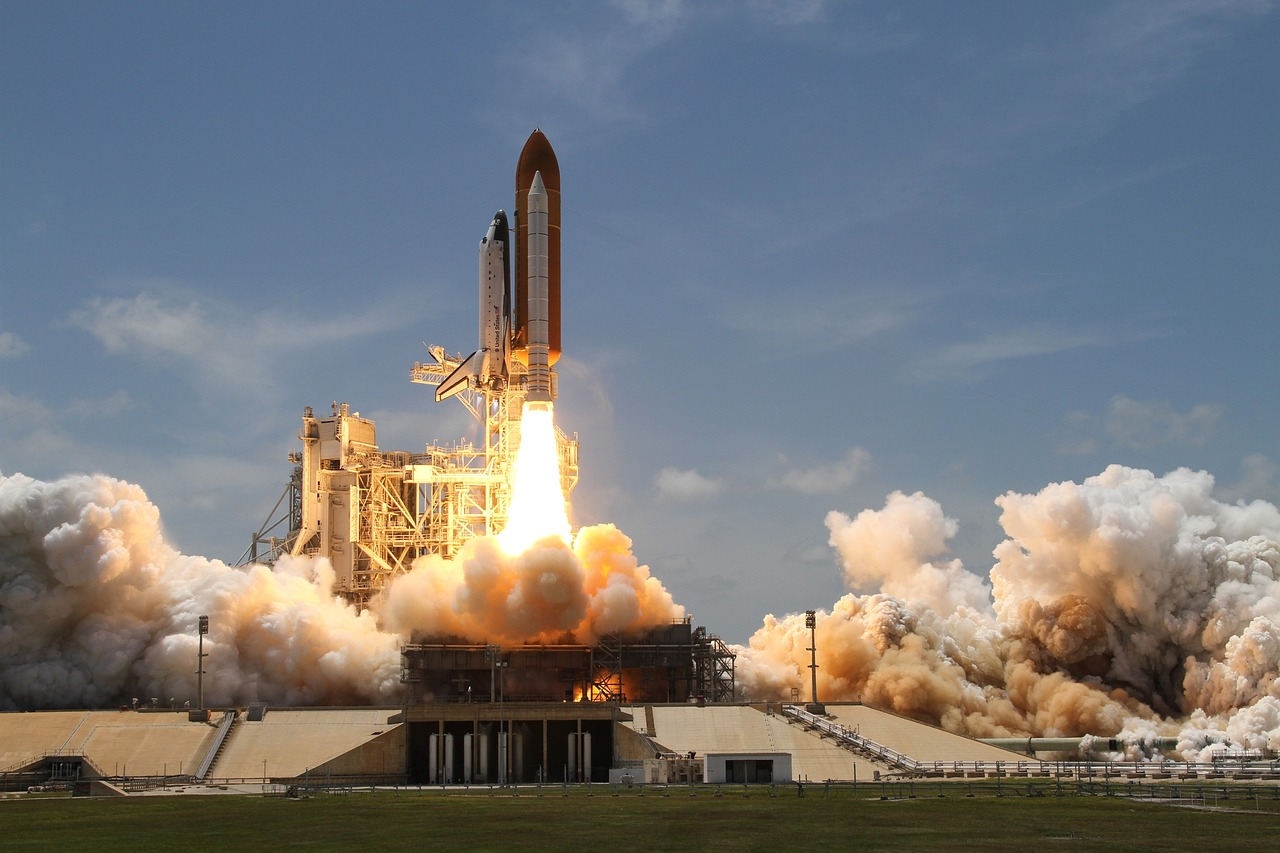
This guide focuses on the core applications of industrial cameras in aerospace and rail transit inspection, systematically explaining the technical principles, selection key points, and system integration solutions — from aerospace component inspection, rail surface defect identification, and drone inspection to extreme-environment imaging.
1. Aerospace Inspection: How Industrial Cameras Ensure Flight Safety
1.1 Unique Challenges of Aerospace Inspection
Aerospace manufacturing demands “zero defects” in quality. A tiny crack, a single debonding, or a dimensional deviation can lead to catastrophic consequences. Typical inspection tasks for industrial cameras in aerospace include:
- Aircraft skin inspection: rivet arrangement, surface scratches, dents, corrosion
- Composite material inspection: delamination, debonding, porosity, fiber breakage
- Engine blade inspection: cracks, deformation, coating loss
- Assembly verification: part presence, gap measurement, bolt torque marking
- 3D scanning and metrology: complex surface dimension measurement, geometric tolerance verification
Core requirements for industrial cameras in aerospace inspection include:
| Requirement | Technical Specification | Reason |
|---|---|---|
| High Resolution | 12-65MP | Detect micron-level defects |
| Global Shutter | Mandatory | Avoid motion distortion |
| Wide Dynamic Range | ≥100dB | Handle highly reflective metal surfaces |
| Spectral Range | Visible + UV + SWIR | Composite inspection requires multi-spectral |
| Interface | 10GigE / CoaXPress | High-resolution, high-frame-rate data transmission |
| Protection Rating | IP65+ | Workshop dust and oil mist protection |
MindVision Solution: MindVision provides high-resolution cameras at the semiconductor inspection level. 25MP and 61MP cameras meet the high-precision inspection requirements of aerospace components. CoaXPress and 10GigE interfaces ensure stable transmission of large-data-volume images.
1.2 Composite Material Inspection: Multi-Spectral Vision Applications
Carbon fiber reinforced polymer (CFRP) is widely used in aerospace, but its defects (delamination, debonding, porosity) are often invisible to the naked eye. Multi-spectral imaging technology — particularly the wavelength ranges covered by UV and SWIR imaging — can reveal internal defects in composite materials.
| Spectral Range | Inspection Capability | Typical Application |
|---|---|---|
| Visible | Surface defects, assembly verification | Skin scratches, rivet arrangement |
| UV | Fluorescent penetrant inspection | Crack detection, surface contamination |
| SWIR | Composite penetration, moisture detection | Delamination, debonding, moisture ingress |
| Thermal IR | Thermal distribution imaging | Engine thermal barrier coating inspection |
MindVision Solution: MindVision provides SWIR and UV cameras, combined with bandpass filters and UV/IR cut filters, enabling multi-spectral inspection of composite materials. Sony IMX990 SWIR sensor camera and Sony IMX992 short-wave infrared camera provide high-sensitivity short-wave infrared imaging capabilities.
1.3 3D Scanning and Metrology: Precision Measurement of Complex Surfaces
Aerospace components are mostly complex curved surfaces, making traditional 2D vision insufficient for dimensional measurement. 3D scanning technology achieves high-precision measurement of complex surfaces.
| Technology Route | Accuracy | Application |
|---|---|---|
| Structured Light 3D | Micron-level | Blade profile inspection, assembly gap measurement |
| Laser Profile Scanning | Sub-micron | Surface roughness, edge inspection |
| Photogrammetry | Millimeter-level | Large structural component overall dimension measurement |
MindVision Solution: MindVision structured light 3D cameras (e.g., MV-3DD240-S45) generate height maps and cross-section measurement data for blade profile inspection and assembly gap verification.
1.4 Engine Blade Inspection: Surface Defects of High-Temperature Alloys
Engine blades are the core components of aero engines, operating under extreme conditions of high temperature, high pressure, and high rotational speed. Tiny cracks, coating loss, and thermal barrier coating damage on blade surfaces can lead to serious consequences.
Inspection Solution:
- High-resolution area scan camera: detects surface cracks and coating defects
- UV fluorescent penetrant: detects micro-cracks invisible to the naked eye
- Thermal camera: detects thermal barrier coating damage
MindVision Solution: MindVision laser beam analysis and metal surface defect detection cameras can be applied to blade surface inspection. Sony IMX540 25MP camera and Sony IMX541 20MP camera provide high-resolution imaging capabilities.
2. Rail Transit Inspection: How Industrial Cameras Safeguard Rail Safety
2.1 Rail Surface Defect Detection
Rail tracks endure continuous train pressure over time, making surface defects such as cracks, spalling, wear, and corrugation common. If not detected in time, these defects can lead to serious accidents such as derailment.
Limitations of Traditional Methods:
- Manual inspection is inefficient with high missed-detection rates
- Ultrasonic testing only detects internal defects; surface defects are difficult to find
- Contact measurement is slow and cannot meet high-speed rail inspection requirements
Industrial Camera Solutions:
- Line scan camera: scans the rail surface at thousands of lines per second for 100% coverage
- 3D camera: measures rail profile and wear volume
- High-frame-rate area scan camera: combined with strobe lighting, captures rail images at high speed
MindVision Solution: MindVision line scan camera for continuous web inspection and machine vision for rail inspection provide a complete rail inspection solution. Sony IMX253 12MP camera and Sony IMX304 camera can be used for high-resolution line scan imaging.
2.2 Catenary and Pantograph Inspection
Wear, cracks, and deviation of high-speed rail catenary and pantograph directly affect power supply safety. Industrial cameras installed on inspection vehicles capture images of catenary and pantograph during high-speed operation.
| Inspection Task | Recommended Camera | Key Technology |
|---|---|---|
| Catenary geometric parameters | 3D camera / stereo vision | Real-time depth measurement |
| Pantograph slide wear | High-resolution area scan camera | Global shutter, short exposure |
| Contact wire wear | Line scan camera | High-speed scanning, profile analysis |
| Insulator defects | UV camera | UV discharge detection |
MindVision Solution: MindVision high-temperature and low-light industrial inspection cameras are suitable for the extreme environments of catenary inspection. Sony IMX174 global shutter camera and Sony IMX273 sensor camera provide high-speed global shutter imaging.
2.3 Tunnel and Track Structure Inspection
Cracks, leakage, and deformation in subway tunnels and track structures require periodic inspection. Industrial cameras mounted on inspection vehicles, combined with 3D scanning technology, can quickly acquire complete tunnel cross-section data.
Inspection Solution:
- Line scan camera: continuously captures tunnel wall images, detects cracks and leakage
- 3D camera: measures tunnel cross-section dimensions and deformation
- Thermal camera: detects leakage areas and temperature anomalies
MindVision Solution: MindVision machine vision for rail inspection and waterproof camera models can be used for tunnel inspection. Sony IMX411 150MP camera and Sony IMX455 61MP camera provide ultra-high-resolution imaging for fine inspection of tunnel walls.
2.4 Railway Vehicle Appearance Inspection
Railway vehicle (EMU, subway, freight car) appearance inspection includes body surface defects, pantograph condition, and wheel tread damage.
Inspection Solution:
- Multi-camera array: simultaneously captures vehicle images from multiple angles
- 3D camera: measures wheel tread wear and profile
- High-frame-rate camera: captures vehicle images at high speed
MindVision Solution: MindVision GigE vs USB3 vs CoaXPress camera interface selection guide helps railway vehicle inspection projects choose the right interface. Power over Ethernet camera setup simplifies cable management for multi-camera deployment.
3. Drone Inspection: How Industrial Cameras Replace Manual High-Altitude Work
3.1 Drone Inspection Application Scenarios
Drones equipped with industrial cameras are transforming traditional infrastructure inspection methods:
| Application | Inspection Target | Camera Type |
|---|---|---|
| Power line inspection | Transmission lines, insulators, towers | High-resolution area scan + thermal |
| Wind turbine inspection | Blade cracks, lightning damage | High-resolution area scan |
| Bridge inspection | Pier cracks, bearing deformation | High-resolution area scan + 3D |
| Railway inspection | Tracks, catenary, signal equipment | High-resolution area scan |
| Building facade inspection | Cracks, spalling, leakage | High-resolution area scan + thermal |
MindVision Solution: MindVision camera for drone inspection solutions provide lightweight, low-power industrial cameras. Sony IMX226 12MP camera and Sony IMX178 low-light camera are suitable for drone mounting. camera for photovoltaic module inspection can be used for drone inspection of solar power plants.
3.2 Drone Camera Selection Key Points
| Selection Dimension | Key Consideration |
|---|---|
| Size & Weight | Limited drone payload; compact cameras preferred (e.g., M12 lens for embedded vision camera) |
| Power Consumption | Battery-powered; low-power design required |
| Interface | MIPI CSI-2 / USB3.0, compatible with drone main controller |
| Global Shutter | Mandatory in flight vibration environments |
| Protection Rating | IP65+ for outdoor environments |
| Shock Resistance | Takeoff/landing and flight vibration require secure connections |
MindVision Solution: MindVision embedded vision camera module and MIPI CSI-2 camera for NVIDIA Jetson are suitable for drone embedded vision systems. M12 lens for embedded vision camera and M12 to C-mount adapter selection guide provide compact lens solutions.
3.3 Image Processing for Drone Inspection
Images captured by drones require real-time or offline processing to identify defects and generate reports. Edge AI computing enables drones to perform preliminary defect detection during flight, reducing data transmission volume.
MindVision Solution: MindVision smart camera with built-in image processing (MV-ITA/ITAE series) supports onboard AI inference, capable of running defect detection algorithms directly on the camera. machine vision camera Python API and GenICam camera control with Python provide flexible software development interfaces.
4. Special Environment Imaging: Industrial Camera Applications Under Extreme Conditions
4.1 High-Temperature Environments
The aerospace and metallurgy industries often involve high-temperature inspection scenarios, such as engine hot-section components, forgings, and in-furnace inspection.
Technical Solution:
- High-temperature housing: water-cooled or air-cooled protective jacket
- Long-distance imaging: through high-temperature lenses or periscope systems
- Thermal camera: non-contact temperature measurement
MindVision Solution: MindVision camera for high-temperature industrial inspection provides industrial cameras with a wide operating temperature range (-20~70°C). Combined with high-temperature housings, they can handle even more extreme temperature environments.
4.2 Underwater Environments
Underwater inspection is applied in nuclear power, water conservancy, shipping, and subsea pipelines. Industrial cameras require waterproof, pressure-resistant, and corrosion-resistant designs.
| Inspection Task | Recommended Camera | Key Technology |
|---|---|---|
| Underwater structural cracks | Waterproof industrial camera | IP68 protection, pressure-resistant housing |
| Underwater pipeline inspection | High-resolution area scan camera | Low-light imaging |
| Nuclear pool inspection | Radiation-resistant camera | Radiation hardening |
| Subsea pipeline inspection | 3D camera | Acoustic + visual fusion |
MindVision Solution: MindVision camera for underwater inspection and camera for low-light industrial inspection provide underwater inspection solutions. Sony IMX178 low-light camera and Sony IMX183 20MP camera are suitable for high-resolution imaging in underwater low-light environments.
4.3 Radiation Environments
Nuclear power plants, nuclear waste treatment facilities, and space environments involve radiation, where ordinary industrial cameras fail rapidly.
Technical Solution:
- Radiation-resistant camera: uses radiation-tolerant sensors and electronic components
- Long-distance imaging: guides images out of the radiation zone through mirror or periscope systems
- Periodic replacement: replaces cameras before accumulated radiation dose reaches threshold
4.4 Low Light and Extreme Temperatures
| Environmental Condition | Challenge | Solution |
|---|---|---|
| Low light (<0.01 lux) | High image noise, long exposure | Large-pixel sensor, NIR enhancement, thermal imaging |
| Extreme low temperature (-40°C) | Battery failure, lens frost | Heated housing, low-temperature battery |
| Extreme high temperature (>70°C) | Sensor overheating, increased noise | Cooling housing, water cooling system |
| High vibration | Image shake, loose connections | Global shutter, rigid brackets, shock-resistant connectors |
MindVision Solution: MindVision camera for low-light industrial inspection and camera for NIR imaging provide low-light solutions. Sony IMX178 low-light camera and Sony IMX249 2MP camera are suitable for extreme low-light environments. camera for high-temperature industrial inspection provides a wide operating temperature range.
5. Lenses and Optics: Special Requirements for Aerospace and Rail Transit
5.1 Lens Selection Key Points
| Application | Recommended Lens | Reason |
|---|---|---|
| Aerospace component dimension measurement | Telecentric lens | Eliminates perspective error, high precision |
| Rail surface inspection | Line scan lens | Matches line scan camera, consistent edge resolution |
| Drone inspection | M12 lens | Compact and lightweight, suitable for embedded |
| High-temperature environment | High-temperature lens | Quartz glass, heat-resistant design |
| Underwater inspection | Waterproof lens | Sealed design, pressure-resistant |
| Large-format camera | M42 lens | Covers large sensors |
MindVision Solution: MindVision provides a full range of lens solutions including telecentric lens for measurement applications, M42 lens for industrial camera, and M12 lens for embedded vision camera. The C-mount vs CS-mount lens for machine vision selection guide helps customers match lenses and cameras.
5.2 Lens Resolution Matching
Lens resolution must match camera pixel size. Key concepts include modulation transfer function (MTF) and the LP/mm and pixel size relationship.
Matching formula:
Lens Object-Side Resolution = 2 × Pixel Size / Magnification
For fundamentals such as pixel size in camera and sensor pixel size, refer to MindVision technical documentation. Lens focal length calculator and how to calculate focal length of a lens tools help quickly calculate focal length.
6. System Integration and Multi-Camera Synchronization
6.1 Multi-Camera Synchronization
Aerospace and rail transit inspection often require multiple cameras to work together. For example, aircraft skin inspection may require multiple cameras shooting from different angles simultaneously; rail inspection may require synchronized acquisition from line scan cameras and 3D cameras.
Multi-Camera Synchronization Requirements:
- Hardware trigger synchronization: all cameras start exposure from the same trigger signal
- Timestamp alignment: each image carries a precise timestamp
- Global shutter: avoids time differences caused by rolling shutter
MindVision Solution: MindVision cameras support multi-camera synchronization, providing hardware trigger and timestamp functions. If you encounter dropped frames, refer to the Jumbo Frame configuration guide in the SDK documentation.
6.2 Interface Selection
| Interface | Bandwidth | Max Cable Length | Application |
|---|---|---|---|
| GigE | ~125 MB/s | 100m | Standard inspection, multi-camera systems |
| 10GigE | ~1 GB/s | 100m (fiber) | High resolution, high frame rate |
| USB3.0 | ~400 MB/s | 5m | Compact equipment, short distance |
| CoaXPress | ~1.25 GB/s | 100m | Ultra-high-speed, high resolution |
| 5GigE | ~625 MB/s | 100m | Medium bandwidth, balanced cost |
MindVision Solution: MindVision provides GigE vs USB3 vs CoaXPress camera interface comparison and selection guide, as well as 10GigE camera interface guide and 5GigE camera interface guide. For CoaXPress vs Camera Link for high-speed vision and Camera Link vs CoaXPress bandwidth, refer to MindVision technical white papers.
6.3 Troubleshooting
| Issue | Cause | Solution |
|---|---|---|
| Dropped frames | Insufficient bandwidth or improper network configuration | Enable Jumbo Frame, use industrial switches, increase buffers |
| Blurred image | Exposure time too long or focus inaccurate | Shorten exposure, refocus, use strobe lighting |
| Trigger desynchronization | Inconsistent trigger signal delay | Use hardware trigger, ensure all cameras share the same trigger source |
| Camera not recognized | Driver not installed or IP misconfigured | Refer to industrial camera driver installation guide |
MindVision Solution: MindVision provides industrial camera driver installation guide and SDK documentation to help quickly troubleshoot common issues such as GigE camera not detected and USB3 camera bandwidth limitation. For blurred image troubleshooting, refer to the exposure time adjustment and lighting optimization guide.
7. Typical Application Quick Reference Table
| Application | Recommended Camera Type | Key Specs | Recommended Lens/Lighting |
|---|---|---|---|
| Aircraft skin inspection | High-resolution area scan camera | 12-25MP, global shutter | Telecentric lens + coaxial light |
| Composite material inspection | SWIR/UV camera | Multi-spectral, high sensitivity | Bandpass filter + special light source |
| Engine blade inspection | High-resolution area scan camera + UV | Micron-level precision | Telecentric lens + UV light source |
| Rail surface inspection | Line scan camera | 2K-16K pixels/line, high speed | Line scan lens + bar light |
| Catenary inspection | High-frame-rate global shutter camera | 60fps+, short exposure | Fixed focal lens + strobe light |
| Tunnel structure inspection | Line scan camera + 3D camera | High resolution, 3D profile | Line scan lens + bar light |
| Drone power line inspection | Compact area scan camera | Lightweight, global shutter | M12 lens |
| Underwater structure inspection | Waterproof industrial camera | IP68, pressure-resistant | Waterproof lens |
| High-temperature inspection | Wide-temperature industrial camera | -20~70°C | High-temperature lens |
| Low-light inspection | NIR-enhanced camera | High sensitivity, low noise | IR illumination + large aperture lens |
| 3D scanning metrology | Structured light 3D camera | Micron-level Z-axis accuracy | Telecentric lens |
8. Frequently Asked Questions
Aerospace inspection typically requires high-resolution (12-65MP), global shutter, wide dynamic range industrial cameras. For composite material inspection, SWIR or UV cameras are needed for multi-spectral imaging. For complex surface dimension measurement, 3D scanning cameras are required. MindVision Sony IMX540 25MP camera and Sony IMX541 20MP camera can be used for high-precision inspection of aerospace components.
Rail tracks are continuously moving objects. Line scan cameras acquire images line by line, achieving 100% surface coverage with no inter-frame gaps. Area scan cameras have blind spots between frames at high speeds. MindVision line scan camera for continuous web inspection and machine vision for rail inspection provide a complete rail inspection solution.
Drone inspection cameras must consider size, weight, power consumption, interface, and shock resistance. Prioritize compact global shutter cameras, such as M12 lens for embedded vision camera combined with embedded vision camera module. MindVision camera for drone inspection solutions provide lightweight, low-power industrial cameras.
Extreme temperature environments require wide-temperature industrial cameras (-20~70°C) with heating or cooling housings. MindVision camera for high-temperature industrial inspection and camera for low-light industrial inspection cover wide operating temperature ranges and can operate stably in -40~70°C environments.
Use a hardware trigger signal to simultaneously start exposure on all cameras, ensuring each image carries a precise timestamp. A global shutter is mandatory; rolling shutter introduces inter-line time differences, causing synchronization errors. MindVision cameras support multi-camera synchronization, providing hardware trigger and timestamp functions.
Underwater inspection cameras require IP68 protection rating, pressure-resistant housing, and corrosion-resistant design. MindVision camera for underwater inspection provides waterproof industrial cameras suitable for nuclear pool, underwater pipeline, and subsea structure inspection.
Common causes and solutions: (1) Jumbo Frame not enabled — enable in NIC settings, set MTU to 9000+; (2) NIC buffer too small — increase receive buffers; (3) Insufficient bandwidth — reduce resolution or frame rate, or upgrade to 10GigE interface; (4) Network latency — use industrial switches. MindVision provides industrial camera driver installation guide and SDK documentation to help quickly troubleshoot GigE camera not detected and USB3 camera bandwidth limitation.
9. Summary: The Core Value of Industrial Cameras in Aerospace and Rail Transit
From aerospace component inspection to rail surface defect identification, from drone inspection to extreme-environment imaging, industrial cameras are becoming the core visual defense line for the aerospace and rail transit industries. These applications impose unique requirements on industrial cameras:
- High precision — micron-level defect detection requires high resolution and quality lenses.
- Extreme environment adaptability — high temperature, low temperature, vibration, radiation, and underwater conditions require special protective designs.
- Multi-spectral capability — composite material inspection requires SWIR, UV, and other special spectral ranges.
- Lightweight and low power — drone-mounted scenarios have strict requirements on size, weight, and power consumption.
- System integration capability — multi-camera synchronization, 3D scanning, and edge AI computing require complete system integration support.
For aerospace and rail transit projects, industrial camera selection should not start with “how many megapixels,” but rather follow this logic:
Inspection Task → Accuracy Requirement → Environmental Conditions → Spectral Needs → Mounting Constraints → Interface & Protocol → Protection Rating
Whether you are building an aerospace component inspection system, rail inspection equipment, or a drone inspection platform, choosing the right industrial camera and vision solution is the critical first step to project success. MindVision provides full-process support from industrial camera selection to machine vision system integration, helping aerospace and rail transit customers build reliable and efficient visual inspection systems.
About MindVision
MindVision is a leading Chinese industrial camera manufacturer founded in 2013, with R&D and production bases in Shenzhen, Changsha, and Wuxi. With nearly 300 employees and over 100 patents and software copyrights, MindVision's product line covers resolutions from 0.3 MP to 410 MP, frame rates from 30 fps to over 1000 fps, and spectral ranges spanning visible, UV, NIR, SWIR, and thermal infrared.
For aerospace and rail transit applications, MindVision provides:
- High-resolution area scan cameras: covering 12MP to 150MP, suitable for aerospace component inspection and rail surface inspection
- Line scan cameras: suitable for continuously moving rail, tunnel, and web inspection
- SWIR/UV cameras: suitable for composite material inspection and fluorescent penetrant inspection
- Thermal cameras: suitable for high-temperature environments and thermal distribution inspection
- 3D cameras: structured light 3D cameras, suitable for complex surface dimension measurement
- Smart cameras (X86 architecture): MV-ITA/ITAE series with Intel processors, supporting onboard AI inference, capable of running defect detection algorithms directly on the camera
- Embedded vision modules: MIPI CSI-2 camera modules, suitable for drones and embedded systems
- Complete SDK support: C/C++, Python, Halcon, VisionPro language packages, supporting PC Linux and ARM Linux embedded deployment
From a single camera to a complete aerospace and rail transit visual inspection system, MindVision provides end-to-end selection support and technical services for aerospace component inspection, rail inspection, drone inspection, and extreme-environment imaging applications.
#MindVision
MindVision Technology Co., Ltd. is a professional domestic industrial camera manufacturer headquartered in Shenzhen, with production centers and R&D bases in Changsha (Hunan) and Wuxi (Jiangsu), employing nearly 300 people. Its product portfolio covers area-scan cameras, line-scan cameras, thermal imaging cameras, SWIR cameras, UV cameras, 3D cameras, and stereo camera modules, with over 100 patents and software copyrights. The company is ISO9001 certified.
For more information or free selection consulting, please visit MindVision's official website or contact the sales team.
We’ll be glad to help you
Please Login
Full Name
Company Name
E-mail*
Country / Region
Your Needs / Application*
Verification code

Get in touch
Name*
E-mail*
Country*
Your Needs / Application*
