
Autonomous Driving Sensor & System Selection: Complete Guide
Complete Guide
Autonomous Driving Sensor & System Selection: Complete Guide
Autonomous driving technology is advancing at an unprecedented pace, powered by advanced sensors, high-performance computing platforms, and sophisticated AI algorithms that enable vehicles to navigate without human intervention. As the global autonomous vehicle market reaches $2.3 trillion in 2025 — projected to grow to $8.4 trillion by 2035 at a 13.9% CAGR — selecting the right perception, decision, and control systems has become mission-critical for automakers and Tier 1 suppliers. This guide breaks down the eight most common autonomous driving scenarios and maps each to MindVision's appropriate camera solutions — from ultra-compact global shutter cameras to thermal imaging, SWIR, 3D, and smart cameras.
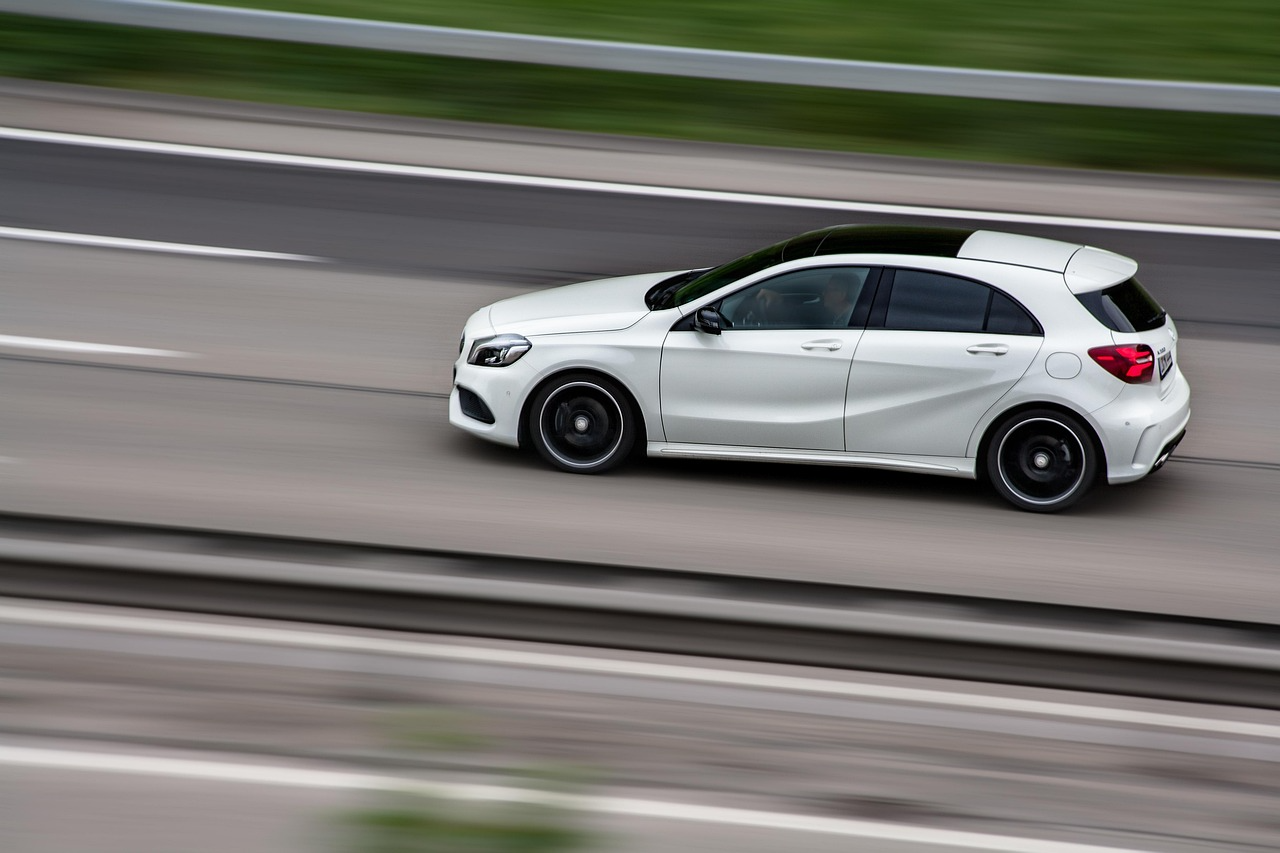
8 Critical Scenarios in Autonomous Driving Systems
Every autonomous driving camera selection project starts with identifying the right scenario. Below we analyze the eight most common autonomous driving tasks — and map each to appropriate MindVision camera solutions.
1. Highway Automated Driving (Highway NOA)
What it detects: Lane lines,前方 vehicles, traffic signs, obstacles at high speeds (60–120 km/h), merging/exit ramps, and surrounding traffic flow.
Why it matters: Highway scenarios are the most mature for autonomous driving deployment. Structured roads with clear lane markings and fewer intersections enable relatively simple autonomous functions. However, high-speed movement demands long-range detection (200m+) and low-latency response — a missed obstacle at 120 km/h can be fatal.
MindVision recommendation: For front perception, the MV-MS136 ultra-compact global shutter camera (14×14×48mm, <20g, 1080×1280 @ 120fps, global shutter, WDR >100dB) delivers sharp, motion-free images at high speed. For thermal redundancy in night and glare conditions, the MV-GF480 high-resolution thermal camera (800×600, NETD ≤55mK, <12ms response) provides long-range thermal awareness. For mapping and high-precision detection, the MV-XG6500GC/GM 65MP 10GigE camera (9344×7000, 15.5fps RAW) captures ultra-high-definition images for HD map construction.
2. Urban Complex Environment Driving (City NOA)
What it detects: Pedestrians, cyclists, traffic lights, stop signs, intersections, roundabouts, tunnels, temporary construction zones, and unpredictable behaviors from other road users.
Why it matters: Urban environments present the greatest challenges for autonomous driving — unclear or missing lane markings, dense intersections, frequent pedestrian and non-motorized vehicle crossings, and interference from weather, lighting, and building遮挡. City NOA requires the highest level of perception intelligence and decision-making capability.
MindVision recommendation: Surround-view perception uses multiple MV-MS136 units — its ultra-compact size allows installation in side mirrors, pillars, and bumpers. For all-weather pedestrian and obstacle detection, the MV-GF120 (400×300 @ 50Hz, NETD ≤55mK) or MV-GF480 provides thermal coverage. For edge AI inference and traffic sign recognition, the MV-ITA/ITAE1000C/M X86 Smart Camera (10MP, Intel N4120 quad-core) performs object detection and classification directly on the camera, reducing latency.
3. Automated Valet Parking (AVP) & Autonomous Parking
What it detects: Parking spaces, obstacles (pillars, walls, other vehicles), pedestrians in parking lots, curb edges, and garage entry/exit ramps.
Why it matters: Automated parking is a key application of autonomous driving in confined spaces, commonly found in parking lots, hotels, and other venues where vehicles need precise maneuvering. This scenario is among the first to achieve large-scale commercialization due to its limited ODD (Operational Design Domain).
MindVision recommendation: The MV-MS136 with global shutter and WDR >100dB captures clear images of low-contrast obstacles in dim garages. For 3D obstacle detection and dimension measurement, the MV-3DD240-S45 Structured Light 3D Camera (2048×1200, DLP projection) generates height maps and cross-section measurements for precise parking maneuver planning.
4. Traffic Jam Pilot (TJP) & Low-Speed Autonomous Driving
What it detects: Stop-and-go traffic, preceding vehicle distance, lane boundaries in congested conditions, cut-in vehicles, and emergency braking events.
Why it matters: TJP is typically the first L3 application deployed — at speeds below 60 km/h on highways or urban expressways, the system takes full control, allowing driver to disengage. This represents the critical transition from L2 (driver monitoring) to L3 (system monitoring).
MindVision recommendation: Primary vision uses the MV-MS136 with 120fps high frame rate for rapid reaction to cut-in vehicles and emergency braking. For L3 safety redundancy, the MV-GF120 thermal camera provides independent pedestrian detection in low visibility, ensuring fail-operational capability. The MV-SUA403GM (3MP, 2048×1536 @ 55.75fps, Sony IMX265) offers cost-effective stable performance for additional surround coverage.
5. Autonomous Trucking & Logistics (Closed/Open Scenarios)
What it detects: Lane keeping at highway speeds, blind-spot monitoring for large vehicles, cargo integrity, docking station alignment, and surrounding traffic in logistics hubs.
Why it matters: Commercial vehicle autonomous driving spans both closed/semi-closed scenarios (ports, warehouses, mining) and open highway scenarios. Ports, parks, and warehousing have pioneered business model validation and batch replication. The economic case is compelling — reduced labor costs and 24/7 operation capability.
MindVision recommendation: Blind-spot monitoring around trailers uses MV-MS136 units — compact and weather-resistant with IP67 housing options. Night-time port operations use MV-GF480 for high-definition thermal detection of workers, animals, and vehicles in complete darkness. For high-precision mapping and cargo dimension verification, the MV-XG6500GC/GM captures ultra-high-resolution images. The MV-SUA403GM provides cost-effective traffic monitoring at logistics hub entrances.
6. Robotaxi & Robobus (Passenger Autonomous Mobility)
What it detects: Passengers boarding/alighting, dynamic urban obstacles, traffic rule compliance, emergency response, and fleet coordination.
Why it matters: Robotaxi represents the highest-value commercial application of L4 autonomous driving, progressively expanding from low-speed closed scenarios to high-speed open scenarios. Baidu plans to deploy 1,000 6th-generation autonomous taxis in Wuhan, targeting profitability by 2025.
MindVision recommendation: 360° visible perception uses 10-12 MV-MS136 cameras — small size, high speed, global shutter. 360° thermal perception uses 2-3 MV-GF480 units for high-definition all-weather, day-night operation. The MV-ITA/ITAE1000C/M X86 Smart Camera handles edge AI inference for real-time passenger detection and obstacle classification. The MV-SUA403GM provides additional surround coverage with proven reliability. Visible-thermal fusion creates dense perception point clouds for robust AI decision-making.
7. Adverse Weather & Night Driving (Edge Cases)
What it detects: Objects in low-light conditions (0.01 lux or less), rain/fog/snow degradation of sensor performance, glare from oncoming headlights, and thermal signatures of living beings.
Why it matters: RGB camera performance degrades significantly in low-light conditions and adverse weather — poor lighting causes motion blur due to increased exposure time, while bright sunlight leads to over-saturation. Ensuring consistent performance across environmental conditions is critical for safety.
MindVision recommendation: Primary thermal detection uses MV-GF480 (or MV-GF120) — long-wave infrared penetrates fog, rain, and darkness, detecting heat signatures of living beings and vehicles. For fog and haze penetration, the MV-GEC130I / MV-GEC500I SWIR cameras (0.4–1.7μm response, InGaAs detector) detect objects through atmospheric obscurants and identify road surface moisture conditions. Supporting visible-light confirmation uses MV-MS136 with WDR >100dB when lighting permits, complementing thermal and SWIR data for fusion algorithms.
8. V2X-Enabled Cooperative Autonomous Driving
What it detects: Beyond-line-of-sight obstacles (500m+), traffic light status, road condition alerts, intersection collision warnings, and infrastructure-provided safety messages.
Why it matters: V2X technology enables vehicles to communicate with infrastructure and other vehicles, extending perception beyond onboard sensor range. However, currently only 20 cities in China have deployed relevant roadside equipment, and most roads lack 500m+ beyond-line-of-sight perception capability. V2X is the key enabler for true L4/L5 autonomy at scale.
MindVision recommendation: Roadside perception units deploy MV-MS136 for visible traffic flow capture and MV-GF480 for night-time pedestrian and vehicle detection at intersections. The MV-ITA/ITAE1000C/M X86 Smart Camera provides edge AI inference directly at the roadside, reducing data transmission latency. The MV-XG6500GC/GM captures ultra-high-definition wide-area traffic scenes for comprehensive intersection monitoring. All data is sent to RSUs for V2X communication, enabling cooperative safety.
Autonomous Driving Camera Selection: Scenario Comparison Table
The following autonomous driving camera selection guide comparison maps each scenario to the optimal MindVision camera solutions:
| Scenario | MindVision Camera | Key Spec Highlight | Role |
|---|---|---|---|
| Highway NOA | MS136 + GF480 + XG6500 | 120fps global shutter + 800×600 thermal + 65MP ultra-HD | Front vision + thermal redundancy + HD mapping |
| City NOA | MS136 + GF120/GF480 + ITAE1000C | Compact + all-weather thermal + edge AI inference | Surround vision + thermal + AI |
| Automated Parking | MS136 + 3DD240-S45 | 14×14×48mm + structured-light 3D depth | Surround + 3D obstacle detection |
| Traffic Jam Pilot | MS136 + GF120 + SUA403GM | High frame rate + 400×300 thermal + 3MP Sony IMX265 | Primary + thermal redundancy + surround |
| Autonomous Trucking | MS136 + GF480 + XG6500 + SUA403GM | Miniature + high-def thermal + 65MP + cost-effective | Blind-spot + night ops + mapping + monitoring |
| Robotaxi | MS136 + GF480 + ITAE1000C + SUA403GM | Full redundancy, visible+thermal fusion + AI + proven reliability | 360° visible + 360° thermal + edge AI + surround |
| Adverse Weather | GF480/GF120 + GEC130I/GEC500I + MS136 | Thermal penetration + SWIR fog/haze penetration + WDR visible | Primary thermal + SWIR + visible support |
| V2X Cooperative | MS136 + GF480 + ITAE1000C + XG6500 | Compact + thermal + edge AI + ultra-HD | Roadside perception + edge AI + monitoring |
Key Specifications to Consider When Selecting Autonomous Driving Cameras
Beyond matching the right camera to your scenario, the following specifications determine whether a specific MindVision camera model will meet autonomous driving requirements in practice:
Resolution vs. Field of View Trade-off
Higher resolution captures finer details but typically comes with narrower FOV. For front perception, high resolution at moderate frame rates is ideal. The MV-XG6500GC/GM delivers 65MP (9344×7000) for ultra-high-definition mapping and long-range classification. The MV-MS136 provides 1080×1280 at up to 120fps, prioritizing temporal resolution for high-speed dynamic scenes. The MV-SUA403GM (3MP, 2048×1536) offers a balanced sweet spot for general surround perception.
Frame Rate & Temporal Resolution
Temporal resolution is critical for safety-critical applications. The MV-MS136 achieves up to 120 fps, making it ideal for high-speed dynamic scenarios. The MV-SUA403GM delivers 55.75 fps for reliable motion capture. Thermal cameras GF120 and GF480 operate at 50Hz, sufficient for thermal imaging applications where temporal resolution requirements differ from visible light.
Spectral Range: Visible + Thermal + SWIR Fusion
Autonomous driving demands perception beyond visible light. MindVision's portfolio spans the full spectrum:
- Visible + NIR: MS136 (global shutter, WDR >100dB), SUA403GM, XG6500
- Thermal (8–14μm): GF120 (400×300), GF480 (800×600) — detect heat signatures in darkness, fog, and glare
- SWIR (0.4–1.7μm): GEC130I, GEC500I — penetrate fog, smoke, and atmospheric haze
Fusing visible, thermal, and SWIR data significantly improves object detection accuracy in all weather conditions.
Interface Selection
MindVision cameras support multiple interfaces for flexible integration:
| Interface | Bandwidth | Max Cable Length | Best For | MindVision Models |
|---|---|---|---|---|
| GigE | ~1 Gbps | 100m (Cat6) | Most automotive applications | MS136, GF120, GF480, SUA403GM, GEC130I |
| 10GigE | ~10 Gbps | 30m (fiber) | High-speed, high-resolution | XG6500 |
| USB3.0 | ~5 Gbps | 5m | Compact, lab/bench | SUA403GM, ITAE1000C |
| USB2.0 | ~480 Mbps | 5m | Smart camera, lower bandwidth | ITAE1000C |
Environmental & Reliability Specifications
Autonomous driving cameras must meet automotive-grade durability standards:
| Specification | MS136 | GF120 | GF480 | SUA403GM | XG6500 | ITAE1000C | GEC500I |
|---|---|---|---|---|---|---|---|
| Operating Temp | -20~70°C | -20~60°C | -20~60°C | -20~60°C | -20~55°C | 0~50°C | -20~40°C |
| IP Rating | IP67 (optional) | IP67 (optional) | IP67 (optional) | IP67 (optional) | — | — | — |
| Shock/Vibration | ✓ | ✓ | ✓ | ✓ | ✓ | ✓ | ✓ |
Regulatory Compliance Considerations for Autonomous Driving Systems
When deploying autonomous driving systems, regulatory compliance encompasses the entire vehicle system — not just sensors. Key regulatory frameworks that shape sensor and system selection:
- UN Regulation No. 157 (ALKS) : First UN autonomous driving regulation正式生效, establishing clear manufacturer responsibility mechanisms during system operation. Mercedes-Benz has obtained UN R157 certification across 30+ countries.
- UN R155 (Cybersecurity) & R156 (Software Updates) : These four UNECE regulations (R155, R156, R157, R171) have become global market access thresholds.
- China's L3/L4 Mandatory National Standards : The Ministry of Industry and Information Technology (MIIT) has issued the first mandatory national standards for L3/L4 autonomous driving, expected to take effect in July 2027. Beijing pioneered the implementation of autonomous vehicle regulations in April 2025.
- EU AI Act & EU 2022/1426 : Full autonomous driving regulations in the EU impose strict准入 requirements for high-level autonomous driving.
- ISO 26262 (Functional Safety) & ISO 21448 (SOTIF) : Together they span hardware reliability, functional safety, and system performance.
Practical implication: Your camera selection must support traceability (image logging for audit trails), redundancy (fail-operational capability for L3+), and validatability (specifications that can be documented in validation protocols). MindVision cameras provide SDK-level control for metadata, timestamp logging, and parameter traceability — all essential for GMP and regulatory documentation.
Why MindVision for Autonomous Driving Camera Solutions
MindVision is a leading Chinese industrial camera manufacturer founded in 2013, with R&D and production bases in Shenzhen, Changsha, and Wuxi. With nearly 300 employees and over 100 patents and software copyrights, MindVision delivers one of the most comprehensive product portfolios in the machine vision industry — covering resolution from 0.3 MP to 410 MP, frame rates from 30 fps to over 1000 fps, and spectral ranges spanning visible, UV, NIR, SWIR, thermal infrared, and more.
For autonomous driving customers specifically, MindVision offers:
- Complete spectral coverage: Visible + NIR + SWIR + Thermal — one vendor for all autonomous driving perception wavelengths
- Diverse form factors: Ultra-compact (14×14×48mm MS136), thermal (GF120/GF480), high-resolution (65MP XG6500), smart camera (X86 ITAE1000C), 3D (3DD240-S45) — every form factor needed across autonomous driving scenarios
- Global shutter across key models: Motion-free imaging for high-speed autonomous driving perception
- Full SDK support: C/C++, Python, Halcon, VisionPro, with support for PC Linux and ARM Linux systems for embedded deployment
- Professional selection consulting: Scenario-based camera selection guidance tailored to your specific autonomous driving application
FAQ: Autonomous Driving Camera & System Selection
Q1: What MindVision cameras are best for highway autonomous driving (Highway NOA)?
A: For Highway NOA, the MV-MS136 serves as the primary front-view camera with 120fps global shutter for sharp motion-free images. The MV-GF480 provides thermal redundancy for night and adverse weather. For HD mapping applications, the MV-XG6500GC/GM 65MP camera captures ultra-high-resolution imagery for precise map construction.
Q2: When should I use thermal cameras (GF120/GF480) instead of visible cameras for autonomous driving?
A: Use MV-GF120 or MV-GF480 thermal cameras when operating in low-light, fog, rain, or glare — conditions where visible cameras fail. Thermal cameras detect heat signatures of living beings and vehicles, providing critical safety redundancy. The GF480 offers 800×600 high-definition thermal imaging for long-range detection, while GF120 provides 400×300 resolution at 50Hz. For L3+ applications, thermal cameras are increasingly mandated for regulatory compliance.
Q3: Why is global shutter important for autonomous driving cameras?
A: Global shutter captures all pixels simultaneously, eliminating motion blur on fast-moving objects. The MV-MS136 features a global shutter with 120fps, making it ideal for high-speed scenarios like highway driving and pedestrian crossing detection. The MV-SUA403GM and MV-XG6500 also feature global shutters for consistent performance across dynamic scenes. Rolling shutter can cause distortion and should be avoided for most in-vehicle applications.
Q4: How do UN R157 and ISO 26262 affect camera selection?
A: These regulations require documented traceability, redundancy for L3+, and functional safety (ASIL D). Your camera must support metadata logging, consistent performance, and SDK-level parameter control for validation protocols. MindVision cameras provide these features — including timestamp logging, parameter traceability, and SDK control for C/C++ and Python — facilitating compliance documentation.
Q5: What is the advantage of the X86 smart camera (ITAE1000C) for autonomous driving?
A: The MV-ITA/ITAE1000C/M X86 Smart Camera features an onboard Intel N4120 quad-core processor with AI inference capability, performing object detection, classification, and traffic sign recognition directly on the camera — reducing latency and eliminating the data-transfer bottleneck. This enables edge deployment without a separate IPC, ideal for real-time decision-making in autonomous driving systems and roadside V2X perception units.
Q6: Can SWIR cameras (GEC130I/GEC500I) be used for autonomous driving?
A: Yes. MV-GEC130I and MV-GEC500I SWIR cameras operate in the 0.4–1.7μm spectral range, detecting objects through fog, smoke, and atmospheric haze — conditions where visible and thermal cameras may struggle. SWIR can detect road surface moisture, identify objects through visual obstructions, and provide all-weather perception capability. For L4 autonomous driving requiring robust all-condition performance, SWIR is increasingly adopted as a complementary sensing modality.
Q7: How fast is the autonomous driving market growing globally?
A: The global autonomous vehicle market is valued at $2.3 trillion in 2025, projected to grow to $8.4 trillion by 2035 at a 13.9% CAGR. China's autonomous driving market reached 450.2 billion RMB in 2025, up 17.5% year-over-year. The autonomous driving software market alone is estimated at $2.7 billion in 2025, projected to reach $11.4 billion by 2035 at a 15.8% CAGR. This growth is structurally driven by regulatory mandates (UN R157, China's L3/L4 standards, EU AI Act) and consumer demand for safer, more convenient mobility — making autonomous driving one of the most predictable long-term growth segments in automotive technology.
Quick-Reference: MindVision Cameras by Autonomous Driving Scenario
| Scenario | MindVision Camera | Key Spec Highlight | Role |
|---|---|---|---|
| Highway NOA | MS136 + GF480 + XG6500 | 120fps + 800×600 thermal + 65MP | Front + thermal redundancy + mapping |
| City NOA | MS136 + GF120/GF480 + ITAE1000C | Compact + thermal + edge AI | Surround + thermal + AI inference |
| Automated Parking | MS136 + 3DD240-S45 | 14×14×48mm + 3D depth | Surround + 3D obstacle detection |
| Traffic Jam Pilot | MS136 + GF120 + SUA403GM | 120fps + thermal + 3MP Sony | Primary + redundancy + surround |
| Autonomous Trucking | MS136 + GF480 + XG6500 + SUA403GM | Miniature + thermal + 65MP + cost-effective | Blind-spot + night ops + mapping + monitoring |
| Robotaxi | MS136 + GF480 + ITAE1000C + SUA403GM | Visible+thermal fusion + AI + proven | 360° visible + 360° thermal + AI + surround |
| Adverse Weather | GF480/GF120 + GEC130I/GEC500I + MS136 | Thermal + SWIR penetration + WDR | Primary + SWIR + visible support |
| V2X Cooperative | MS136 + GF480 + ITAE1000C + XG6500 | Compact + thermal + edge AI + ultra-HD | Roadside perception + AI + monitoring |
Contact MindVision for Expert Autonomous Driving Camera Selection Advice
Choosing the right camera for autonomous driving involves balancing resolution, frame rate, spectral range, form factor, environmental robustness, and system cost. An incorrect selection may lead to missed obstacle detection, false positives, decision latency, system instability, and ultimately safety risks and regulatory non-compliance.
MindVision provides professional camera selection consulting for autonomous driving applications. Our engineering team can analyze your specific operational design domain (ODD), vehicle platform constraints, environmental conditions, and detection requirements to recommend the optimal camera, lens, lighting, and housing configuration.
For autonomous driving perception, MindVision offers eight key camera solutions:
MV-MS136
Ultra-Compact Global Shutter Camera — 14×14×48mm, <20g, 1080×1280 @ 120fps, global shutter, WDR >100dB. Ideal for side-mirror blind-spot monitoring, DMS, surround view.
MV-GF120
Industrial Thermal Imaging Camera — 400×300 @ 50Hz, NETD ≤55mK, accuracy ±1℃/±2%, GigE Vision. Reliable pedestrian/animal detection in darkness, fog, glare.
MV-GF480
High-Resolution Thermal Camera — 800×600, 13.6×10.2mm sensor, NETD ≤55mK, <12ms response, RJ45 GigE with PoE, full SDK. High-def thermal for long-range perception.
MV-SUA403GM
Global Shutter Area Scan Camera — 3MP (2048×1536), Sony IMX265, 55.75fps, GigE/USB3.0. Cost-effective for intelligent transportation and vehicle detection.
MV-XG6500GC/GM
65MP 10GigE Ultra-HD Camera — 9344×7000, global shutter, 15.5fps RAW / 31fps JPEG. Ideal for HD mapping, long-range classification, and dataset collection.
MV-ITA/ITAE1000C/M
X86 Smart Camera — 10MP, Intel N4120 quad-core, onboard AI inference. Performs object detection and classification directly on camera — edge deployment.
MV-3DD240-S45
Structured Light 3D Camera — 2048×1200, DLP projection, GPU acceleration. Generates height maps for 3D obstacle detection and road profiling.
MV-GEC130I / GEC500I
SWIR Short-Wave Infrared Cameras — 0.4–1.7μm response, InGaAs detector. GEC500I: 5MP, 24fps, semiconductor cooling. Detects through fog, smoke, haze.
Whether you are an OEM, Tier 1 supplier, system integrator, or algorithm developer, we are happy to offer technical support, sample testing, and product demonstrations. Our team can help you select the right combination of visible-light, thermal, SWIR, 3D, and smart cameras for your specific autonomous driving application — from L2+ highway NOA to L4 Robotaxi full autonomy.
Get Your Tailored Autonomous Driving Camera Selection Recommendation
Email: globalmarket@mindvision.com.cn
Website: www.mindvision.ltd
Contact us for tailored recommendations — from a single camera to a complete autonomous driving perception solution.
© 2026 MindVision. All rights reserved.
We’ll be glad to help you
Please Login
Full Name
Company Name
E-mail*
Country / Region
Your Needs / Application*
Verification code

Get in touch
Name*
E-mail*
Country*
Your Needs / Application*
