
How Industrial Cameras Empower Smart Aquaculture Monitoring — A Complete Selection Guide
From Vision to Data: How Industrial Cameras Empower Smart Aquaculture Monitoring — A Complete Selection Guide
Traditional aquaculture monitoring has long relied on manual sampling, weighing, and visual observation — methods that are labor-intensive, invasive, and incapable of providing continuous, real-time data. As stocking densities increase and species diversify, accurately grasping fish biomass, health status, growth trends, and population dynamics has become critical for optimizing feed strategies, improving survival rates, and reducing production costs.
Machine vision systems enable non-contact, non-invasive assessment of fish condition, activity, and biomass; artificial intelligence processes massive image data to assist in detecting abnormal behavior, predicting growth, and refining management practices. At the heart of this ecosystem, the selection of industrial cameras directly determines system precision, stability, and deployment feasibility. This guide provides a comprehensive camera selection framework for typical aquaculture monitoring scenarios, along with scenario-specific recommendations.
1. Five Core Application Scenarios
Every monitoring project begins with defining the specific application scenario. Below we outline the five most common vision tasks in aquaculture and map each to appropriate camera technologies.
Scenario 1: Fish Counting & Population Density Assessment
What it detects: Automatic identification and counting of individual fish in the field of view, total population count, and density distribution in ponds or cages.
Why it matters: Accurate count and density data underpin feeding decisions, growth curve construction, disease prevention, and harvest planning. Manual counting is inefficient, error-prone, and disruptive to fish. Automated counting enables high-frequency, even real-time population tracking.
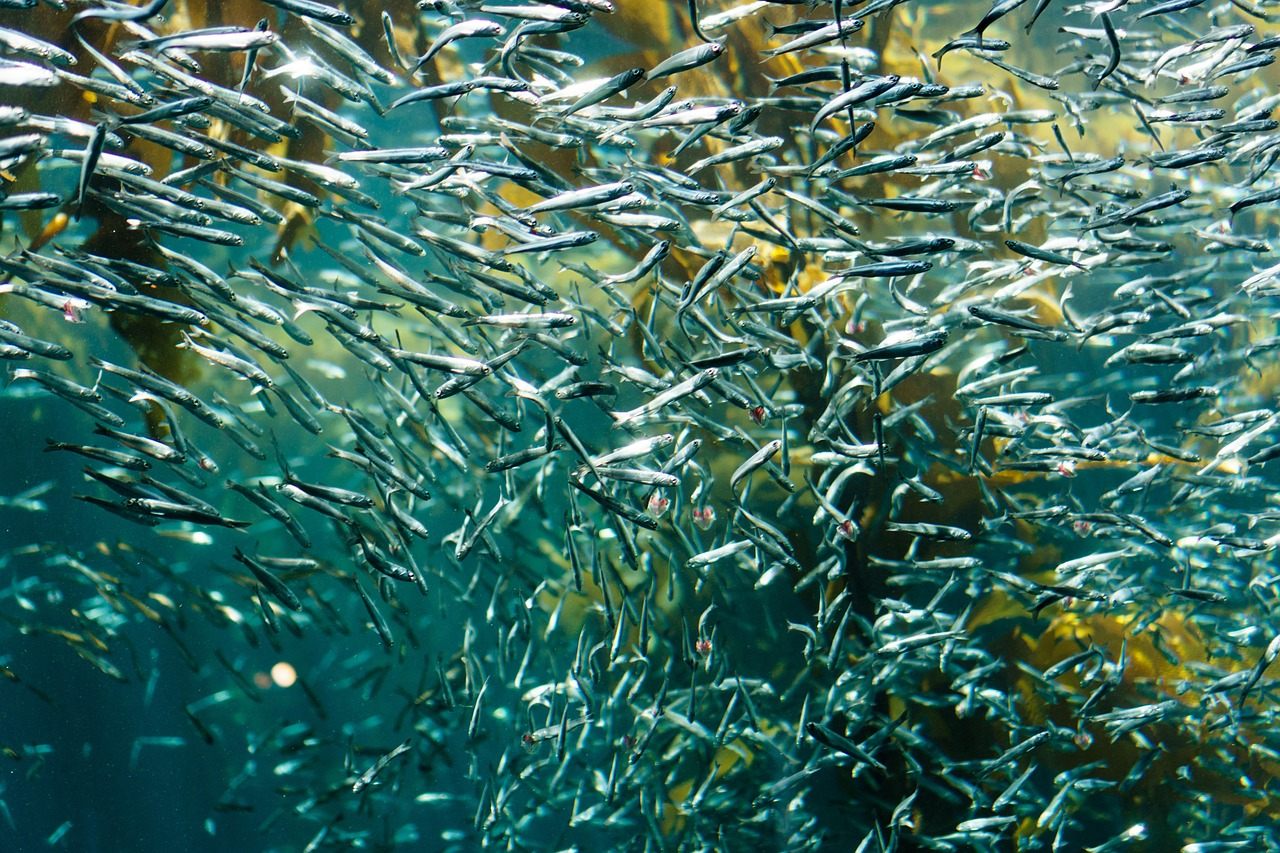
Recommended camera: A high-frame-rate, medium-resolution area-scan camera with global shutter (GigE or USB3.0 interface), paired with multi-object tracking algorithms. High frame rate (≥60 fps) captures fast-swimming fish without motion blur; global shutter ensures crisp contours in every frame. Underwater LED or polarized lighting helps suppress surface reflections.
MindVision recommendation: GigE area-scan cameras (1–5 MP, global shutter, ≥60 fps) with ring-type underwater illumination and water-proof housings.
Scenario 2: Non-Contact Size Measurement
What it detects: Morphological parameters such as body length, height, and width, using stereo vision or monocular imaging with a known scale reference.
Why it matters: Size data is fundamental for assessing growth rate, determining developmental stage, calculating condition factor, and analyzing population structure. Traditional manual measurement requires catching and lifting fish out of water, causing stress and injury, and cannot be performed frequently. Camera-based non-contact measurement enables regular, stress-free sampling.
Recommended camera: Stereo camera modules or 3D cameras (structured light or laser-line profiling). For static or slow-moving fish, dual area-scan cameras with synchronized triggering can be used; for fast-moving objects, high-speed 3D profilometers are preferred. Resolution depends on required accuracy — typically a 5+ MP area camera with calibration targets achieves centimeter-level accuracy, while millimeter-level precision demands higher resolution and more stable optics.
MindVision recommendation: MindVision stereo camera modules (global shutter, sync-trigger capable) or 3D cameras (laser-line + structured light), supplied with calibration tools and 3D reconstruction algorithms.
Scenario 3: Biomass (Weight) Estimation
What it detects: Estimation of fish weight based on visual dimensional parameters, using regression models or deep learning algorithms.
Why it matters: Biomass (total weight) directly dictates feeding rates, stocking density management, and harvest schedules. Traditional weighing requires netting and removing fish from water, which is time-consuming and causes stress and mortality. Non-contact weight estimation provides rapid, approximate weight values with minimal disturbance, enabling high-frequency monitoring.
Recommended camera: Similar to size measurement — high-resolution, high-frame-rate area-scan or stereo cameras to ensure accurate feature extraction. Additionally, because different species (e.g., salmon, sturgeon, tilapia) have varying body shapes, camera color fidelity and detail capture are important for species recognition and model optimization.
MindVision recommendation: High-resolution GigE area-scan cameras (5–20 MP, global shutter), optionally with visible + NIR dual-channel configurations to enhance contour extraction for fish of different skin colors.
Scenario 4: Health & Behavior Monitoring
What it detects: Swimming posture, feeding behavior, schooling patterns, respiration rate, skin color changes, etc., for early detection of disease, stress, or water quality deterioration.
Why it matters: Fish behavior is one of the most direct indicators of environmental health and physiological status. Reduced feeding may signal disease or water issues; abnormal swimming (e.g., side-swimming, circling) can indicate neurological or parasitic infections. Human observation cannot cover 24/7, while vision systems enable continuous surveillance.
Recommended camera: Low-light-optimized area-scan cameras (global shutter preferred) with Wide Dynamic Range (WDR) to handle underwater light variations. For nighttime or deep-water scenarios, infrared illumination (850 nm or 940 nm) is recommended to avoid disturbing normal behavior. Thermal cameras can also detect body temperature anomalies (e.g., local inflammation) but are generally more expensive.
MindVision recommendation: Low-light USB3.0/GigE area-scan cameras (low-noise Sony CMOS), with optional NIR-enhanced models, and MindVision far-infrared thermal cameras for specialized research applications.
Scenario 5: Water Quality & Environmental Visual Monitoring (Auxiliary)
What it detects: Water transparency, suspended solids, feed residue, bottom debris, etc., to assist in water quality assessment.
Why it matters: Physicochemical parameters (DO, ammonia, pH) are typically measured by sensors, but visual information provides macroscopic context — e.g., algal blooms (color changes), feed accumulation zones — which sensors cannot directly perceive.
Recommended camera: Standard visible-light area-scan cameras suffice for basic needs, but must be waterproof and anti-fog. For long-term underwater deployment, pressure-resistant and corrosion-resistant housings are required. SWIR cameras can penetrate turbid water to observe bottom materials.
MindVision recommendation: SWIR cameras (900–1700 nm) for bottom inspection in turbid water, or HDR visible cameras for high-contrast surface environments.
2. Selection Comparison Table
The table below maps each scenario to the optimal camera type, interface, resolution range, and special requirements:
| Scenario | Camera Type | Interface | Resolution Range | Shutter Type | Special Requirements |
|---|---|---|---|---|---|
| Fish counting & density | Area scan | GigE / USB3.0 | 1–5 MP | Global shutter | High frame rate (≥60 fps) + underwater illumination |
| Size measurement | Stereo / 3D | GigE / USB3.0 | 2–5 MP per view | Global shutter | Sync trigger + calibration targets |
| Biomass estimation | High-res area / stereo | GigE / USB3.0 | 5–20 MP | Global shutter | High color fidelity + optional multi-spectral |
| Health & behavior | Low-light area / thermal | GigE / USB3.0 | 0.5–5 MP | Global/rolling | WDR + NIR/IR illumination |
| Water quality assistance | Area / SWIR | GigE / USB3.0 | 0.3–2 MP | Global | Waterproof/pressure housing + turbidity penetration (SWIR) |
3. Key Specification Considerations
3.1 Resolution vs. Frame Rate Trade-off
Higher resolution (>5 MP) captures finer surface details for weight and size estimation, but reduces maximum frame rate. For counting and behavior monitoring, 1–3 MP with high frame rate (90–120 fps) is often more advantageous. Most aquaculture applications work well at 2–5 MP and 30–60 fps, unless micro-defects (e.g., scale damage) or very high-speed swimming (e.g., salmon jumping) must be detected.
3.2 Global Shutter vs. Rolling Shutter
For fast-moving fish, global shutter is preferred because all pixels are exposed simultaneously, avoiding motion-induced skew or distortion. Rolling shutter causes "jello effect" on moving objects, compromising measurement accuracy. If the target is stationary or slow-moving (e.g., benthic fish) and lighting is sufficient, rolling shutter may be acceptable, but global shutter remains the safer choice.
3.3 Interface Selection
- GigE (1 Gbps, 100-m cable): Most common, cost-effective, suitable for long-distance deployment (large ponds).
- USB3.0 (5 Gbps, 5-m cable): Compact systems or lab setups — high bandwidth but limited distance.
- 10GigE (10 Gbps, extendable via fiber): Multi-camera systems or high-resolution, high-frame-rate video for AI analysis.
3.4 Spectral Range
- Visible (400–700 nm): Standard for counting, appearance, and behavior observation.
- Near-infrared (700–1000 nm): Penetrates turbidity to some extent and is less irritating to fish (fish are less sensitive to red), suitable for nighttime illumination.
- SWIR (900–1700 nm): Penetrates turbid water, plastic, and glass; used for bottom residue detection or surface oil films.
- Thermal infrared (8–14 μm): Monitors body temperature anomalies or facility heat dissipation issues.
3.5 Environmental Adaptability
- Water/dust protection: IP67 or higher, or custom underwater housings.
- Operating temperature: Aquaculture may involve outdoor heat or cold (e.g., winter) — cameras should support wide temperature ranges (-20 °C to 60 °C).
- Corrosion resistance: Saltwater farming requires salt-fog-resistant materials and coatings.
4. Compliance & Traceability
Though aquaculture is not as strictly regulated as pharmaceuticals, an increasing number of certification schemes (ASC, BAP, GlobalG.A.P.) require traceable monitoring data. Vision-based image records can:
- Provide growth data to document that rearing cycles meet standards
- Support health management by recording disease events and treatments
- Optimize feed conversion via biomass estimates, reducing waste and environmental impact
- Facilitate export compliance, as some importing countries require digital records of farming processes — visual data serves as supporting evidence
Therefore, choosing cameras that support metadata logging (timestamps, exposure parameters, frame numbers), image archiving, and API interfaces helps build a complete digital traceability system. MindVision's SDK offers rich image metadata output for easy integration into farm management platforms.
5. Why Choose MindVision
Founded in 2013, MindVision is a leading Chinese industrial camera manufacturer with headquarters in Shenzhen and R&D/production bases in Changsha and Wuxi. With nearly 300 employees and over 100 patents and software copyrights, MindVision delivers one of the most comprehensive product portfolios in machine vision. For aquaculture, MindVision offers unique value:
- Full product line: Area-scan, line-scan, 3D, stereo, SWIR, and thermal — covering all visual needs without multi-vendor integration.
- High frame rate with low power: For example, the fully domestic USB3.0 series achieves 75 fps at 5 MP with power consumption under 3 W, ideal for field solar-powered setups.
- Wide interface choices: GigE, USB3.0, 10GigE, CoaXPress — compatible with various edge computing devices.
- Wide temperature and durability: Most models support -20 °C to 70 °C, and with custom waterproof housings they operate reliably in humid, salt-spray environments.
- Robust SDK support: Windows, Linux, ARM Linux, macOS — seamless integration with AI frameworks like TensorRT and OpenCV.
- Customization capabilities: Optical modules, housings, spectral responses — tailored for special underwater applications.
6. Frequently Asked Questions
For most fish group scenarios, area-scan cameras are sufficient because fish are distributed in a 2D space and can be captured in a single frame. Line-scan cameras are better for continuous conveyor-based single-file fish (e.g., graders) or for scanning large pond bottoms. MindVision offers both types.
Standard cameras are not waterproof; they require a waterproof housing (acrylic or metal) with an optical window (anti-reflective coating). MindVision can provide design guidance for custom housings or recommend third-party solutions.
Use underwater ring lights or bar-shaped LED lights, and select cameras with Wide Dynamic Range (WDR). Many MindVision models support HDR mode to balance highlights and shadows.
SWIR (900–1700 nm) can penetrate turbid water and plastic/glass to detect bottom residue, fecal accumulation, or monitor surface oil films and bubbles at night. Additionally, some fish species show unique reflective patterns in the SWIR range, aiding species identification.
Depends on pond size and camera distance. Generally, each fish should occupy at least 50–100 pixels in width to ensure reliable AI detection. For a 30-cm fish, a 5-MP camera at 2-meter height can meet this requirement. Higher resolution improves accuracy but increases processing load — trade-offs are necessary.
Yes. Sick or stressed fish may exhibit minor skin temperature changes (local inflammation or metabolic shifts), which thermal cameras can detect non-contactly. However, water temperature and ambient effects must be considered; this is typically a supplementary research tool. MindVision offers thermal cameras in various resolutions.
Yes. Counting, sizing, weight estimation, and behavior analysis heavily rely on deep learning models. MindVision's X86 smart cameras feature on-board AI inference, running models directly on the camera without an external PC, ideal for edge deployment.
7. Quick Reference: MindVision Camera Model Recommendations
| Scenario | Recommended MindVision Series | Key Highlights | Recommended Accessories |
|---|---|---|---|
| Fish counting | USB3.0/GigE area (global shutter) | 1–5 MP, ≥75 fps, low power | Underwater ring light |
| Size measurement | Stereo module / 3D camera | Sync trigger, stereo calibration | Calibration board + mounts |
| Biomass estimation | High-res area (5–20 MP) | High color fidelity, global shutter | Telecentric lens (optional) |
| Health/behavior | Low-light area + NIR-enhanced | WDR, low noise | IR illuminator (850 nm) |
| Water quality assistance | SWIR (900–1700 nm) | Turbidity penetration, global shutter | SWIR lens + dedicated lighting |
| Thermal monitoring | Far-infrared thermal series | Calibrated radiometric output, multiple res. | None (built-in analysis) |
#MindVision
Choosing the right industrial camera for your farm requires balancing resolution, frame rate, spectral range, environmental protection, and budget. An incorrect selection may lead to missed detections, false positives, system instability, and ultimately reduced profitability. MindVision provides professional camera selection consulting for aquaculture. Our engineering team can analyze your specific species, pond dimensions, installation conditions, and detection goals to recommend the optimal camera, lens, lighting, and housing. Whether you are an integrator or end user, we are happy to offer technical support and product demonstrations.
We’ll be glad to help you
Please Login
Full Name
Company Name
E-mail*
Country / Region
Your Needs / Application*
Verification code

Get in touch
Name*
E-mail*
Country*
Your Needs / Application*
