
Eyes in the Warehouse: How Industrial Cameras Transform Logistics Automation from Blind Motion to Smart Vision
Eyes in the Warehouse: How Industrial Cameras Transform Logistics Automation from Blind Motion to Smart Vision
The relentless expansion of the global e‑commerce logistics market is accelerating warehouse automation upgrades. Industry data shows that the global smart warehousing market surpassed $320 billion in 2026, with machine vision‑related investment rising from under 5% in 2023 to over 12%. The driving logic is straightforward: when cargo throughput grows at more than 20% annually, any "blind" link becomes an efficiency sinkhole—whether it is the manual barcode scanning bottleneck, return costs from picking errors, or collision risks for AGVs operating in complex environments.
The fundamental pain point of traditional warehouse automation is that systems "move but cannot see": conveyors run, AGVs shuttle, and robot arms grip, yet without visual perception, these devices merely execute pre‑programmed routines. When confronted with real‑world variables such as mixed SKU placement, stacked parcels, or damaged labels, the system frequently alarms and halts, requiring human intervention—turning "automation" into "semi‑automation." Industrial cameras and machine vision are fundamentally changing this landscape.
1. Inbound: From "People Go to Goods" to "Goods Come to Vision"
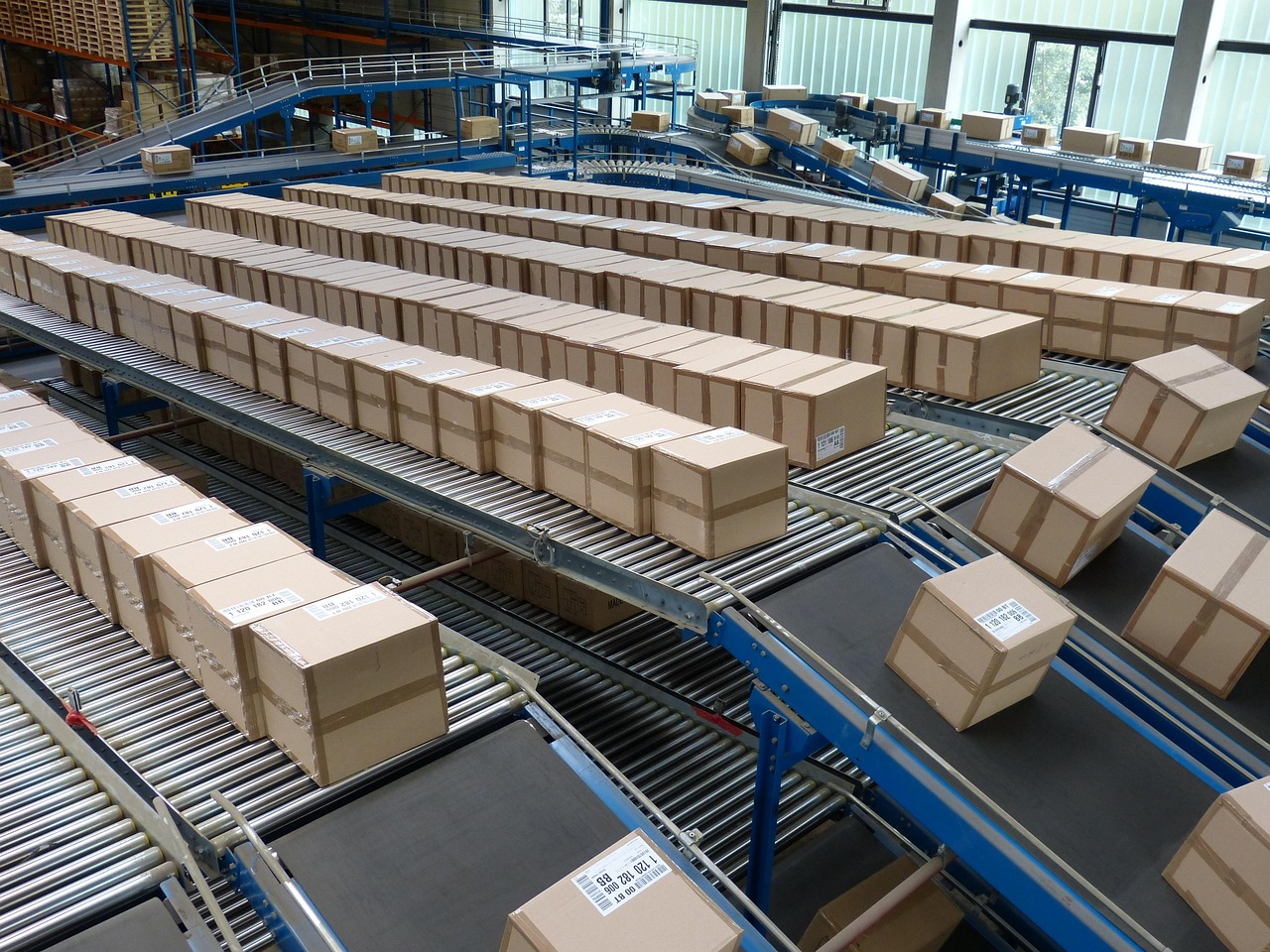
1.1 High‑Speed Code Reading — 3,000 Items Per Hour Efficiency Revolution
In any modern warehouse, tens of thousands of parcels flood in from the receiving dock each day. Traditional inbound workflows require workers to scan barcodes one by one, verify information, and enter data into the system—a skilled worker's peak throughput is roughly 600–800 items per hour, with error rates rising significantly after eight consecutive hours. In high‑throughput settings like express sorting centers and e‑commerce forward warehouses, this manual bottleneck has become the primary constraint on overall efficiency.
Flying‑scan solutions are upending this process. By deploying industrial cameras above high‑speed conveyors, parcels pass through the scanning zone at constant speed without stopping, with codes read instantaneously. Deployment data from domestic vision solution provider Xinsuan Technology shows that a high‑speed area‑scan flying system achieves 3,000 items per hour with a 99.99% recognition rate. Compared with manual scanning, this delivers a four‑ to five‑fold efficiency gain, with no degradation from shift length or staff turnover.
Key technical factors enabling this performance include:
• High‑frame‑rate global‑shutter cameras: eliminate geometric distortion from rolling shutters under high‑speed motion, keeping barcodes intact.
• Large field of view combined with high resolution: a single camera covers the full conveyor width, reducing multi‑camera stitching costs.
• Multi‑angle illumination plus polarizing filters: remove glare from reflective surfaces such as plastic bags and stretch wrap.
💡 Product Fit
Flying‑scan code reading demands high frame rates (>200 fps) and global shutter. The MindVision SUA series, covering 0.3 MP to 20 MP with frame rates up to 791 fps and global shutter, ensures barcodes on high‑speed conveyors are captured free of smear and distortion—an ideal match for such applications.
1.2 AI Label Recognition — From "Scanning Barcodes" to "Understanding Goods"
Real‑world inbound scenarios are far more complex than ideal laboratory conditions: labels may be wrinkled, tilted, covered by tape, faintly printed, or even partially torn. Traditional rule‑based barcode recognition algorithms can see success rates plummet below 70% in these cases. In June 2026, German industrial camera manufacturer IDS Imaging launched the Vision AI Label Reader—a deep‑learning‑based system that automatically locates, rectifies, and reads blurred and damaged labels from multi‑angle cargo images, enabling plug‑and‑play inbound automation.
Key differences between AI label recognition and traditional approaches:
| Dimension | Traditional Barcode Reading | AI Label Recognition |
|---|---|---|
| Recognition rate (intact label) | ~99% | ~99.9% |
| Recognition rate (tilted/blurred label) | 60–70% (severe drop) | >95% (high robustness) |
| Multi‑label mixed reading | Manual pre‑processing required | Automatic separation + individual reading |
| Deployment difficulty | Precise lighting angle tuning needed | Plug‑and‑play, self‑adaptive |
The industry significance of this technology goes beyond efficiency gains—it transforms inbound from passive data entry into active perception. Cameras are no longer mere data collectors but cognitive terminals that "understand" cargo. For AI algorithms to interpret goods, front‑end image quality is critical: resolution determines the richness of details available to the model, and adaptive exposure directly affects the signal‑to‑noise ratio under complex lighting. The MindVision SUA series, with resolution options from 5 MP to 20 MP and adaptive exposure, provides high‑clarity, low‑noise image input for AI inference—even in challenging inbound station environments with plastic bag glare and cardboard shadows, it consistently outputs images that AI models can rely on, significantly improving recognition of blurred or damaged labels.
💡 Product Fit
AI label recognition requires extremely high front‑end image quality. The MindVision SUA global‑shutter cameras (5–20 MP options) with adaptive exposure deliver consistently high‑SNR images under complex inbound lighting, making them an ideal image‑acquisition front‑end for AI label recognition systems.
2. Warehouse Management: Making Every Inch of Shelf Space Quantifiable
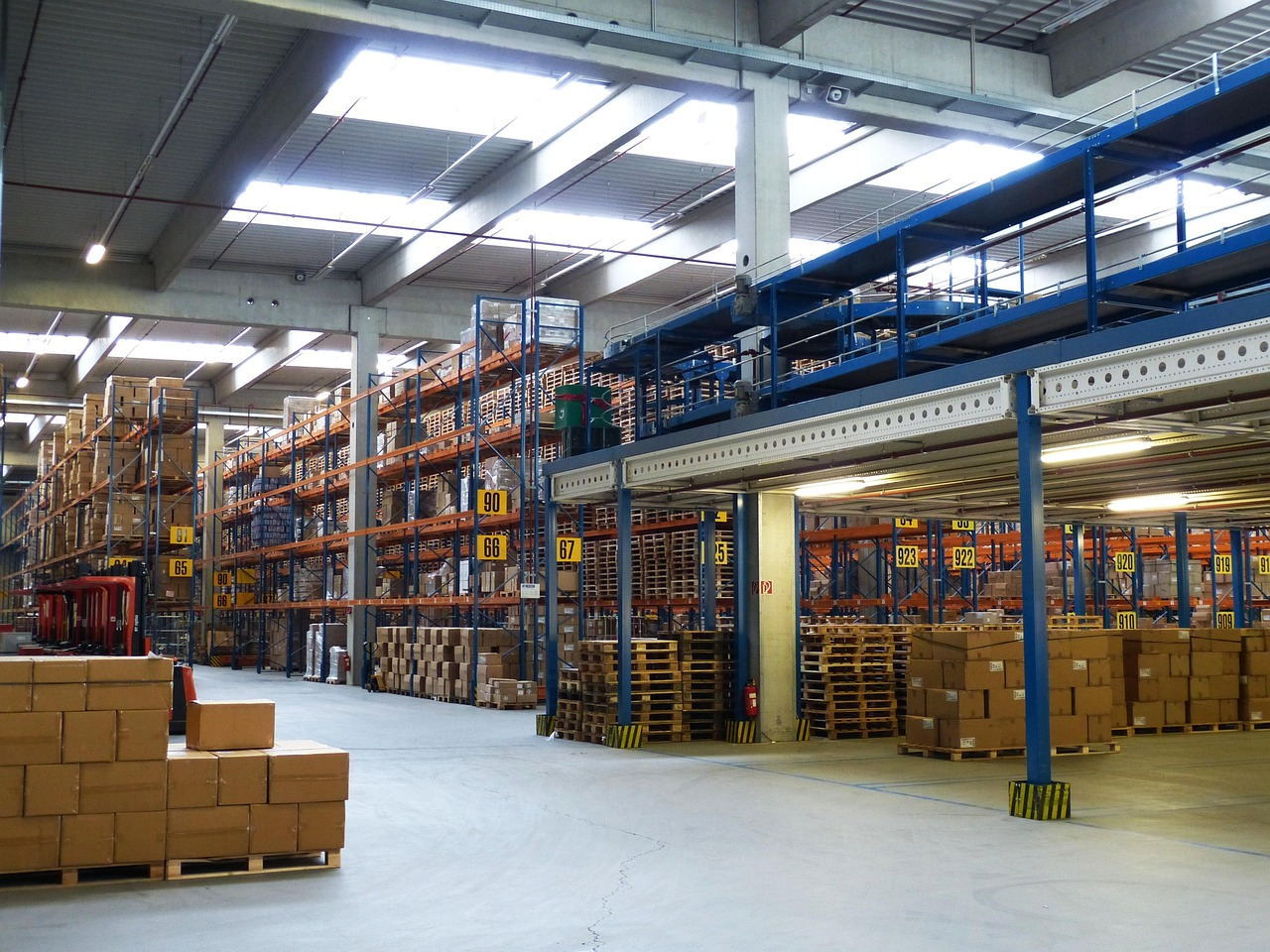
2.1 3D Volumetric Measurement — From Estimation to Millimeter‑Level Precision
A long‑underestimated cost black hole in warehouse operations is inaccurate volumetric data. Manual measurement typically carries error rates of 10–20%, and irregular items (cylinders, L‑shapes, polygonal packaging) are nearly impossible to measure accurately. Direct consequences include freight cost estimation errors (inflating logistics costs by 5–8%), suboptimal bin planning (reducing space utilization by 10–15%), and billing disputes with customers or logistics partners.
3D vision cameras are addressing this problem. For example, MRDVS has deployed a volumetric measurement solution (now in use at multiple large‑scale e‑commerce warehouses) that uses structured light or stereo vision to achieve millimeter‑level accuracy within a 0.5–2 m range, with a measurement time of under 0.3 seconds per item. Critically, the system operates reliably under 100,000 lux bright light without requiring additional shading—essential for cross‑dock warehouses with clear heights over 10 meters.
It is worth noting that in practical deployment, while 3D depth cameras handle spatial dimension capture, 2D industrial cameras are still needed to acquire surface texture, label information, and barcode content—only by combining both can a complete digital cargo profile be built. For example, at an inbound measurement station, MindVision SUA high‑resolution area‑scan cameras can simultaneously capture front‑facing high‑definition images, which, together with 3D depth data, enable a single station to complete volumetric measurement, label OCR, and visual archiving—eliminating the need to shuttle goods between multiple stations. This "3D + 2D" dual‑camera collaboration is becoming the standard configuration for e‑commerce forward warehouses and express sorting centers.
2.2 Bin Status Detection — Eliminating the Waste of "Empty"
In traditional warehouses, whether a shelf bin is occupied typically relies on manual patrols or system records from a previous step. In practice, bins are frequently emptied without timely system updates. An internal audit at a mid‑sized e‑commerce warehouse showed that with over 15% shelf vacancy, the ERP system still displayed full capacity—wasting warehouse space and hampering replenishment efficiency.
By deploying shelf‑facing industrial cameras on overhead cranes, shuttle vehicles, or at the top of rack aisles, combined with simple object detection algorithms, real‑time bin‑status monitoring across the entire warehouse is achievable. A mid‑sized warehouse with 10,000 bins can be covered with just 4–6 high‑resolution cameras, at a hardware cost far below the passive waste of rental space.
Bin status detection imposes several specific requirements on industrial cameras: (1) rack aisles typically have clear heights of 8–12 m, requiring long‑distance shooting with sufficient resolution to distinguish individual bin occupancy; (2) the top‑of‑rack deployment environment is inconvenient for frequent maintenance, so PoE (Power over Ethernet) is essential for simplified cabling and reliability; (3) lighting conditions vary greatly, demanding wide dynamic range to handle the extreme contrast between skylight illumination and deep shelf shadows. The MindVision GE series GigE cameras exemplify this: with resolutions up to 20 megapixels, they can clearly resolve individual bin states from distances over 10 meters; PoE requires only a single Ethernet cable for both data and power, dramatically simplifying high‑rack deployment. Just 4–6 GE cameras can cover the real‑time inspection needs of a 10,000‑bin warehouse, with hardware costs often less than one month of the wasted rental space.
💡 Product Fit
For bin status detection, the MindVision GE series GigE cameras are recommended. Their 20 MP resolution supports long‑distance, clear imaging of high shelving; PoE simplifies field cabling; and wide dynamic range handles the extreme contrast between skylight and shelf shadows—just 4–6 units cover a 10,000‑bin warehouse.
3. Picking and Sorting: From "People Finding Goods" to "Vision Finding Goods"
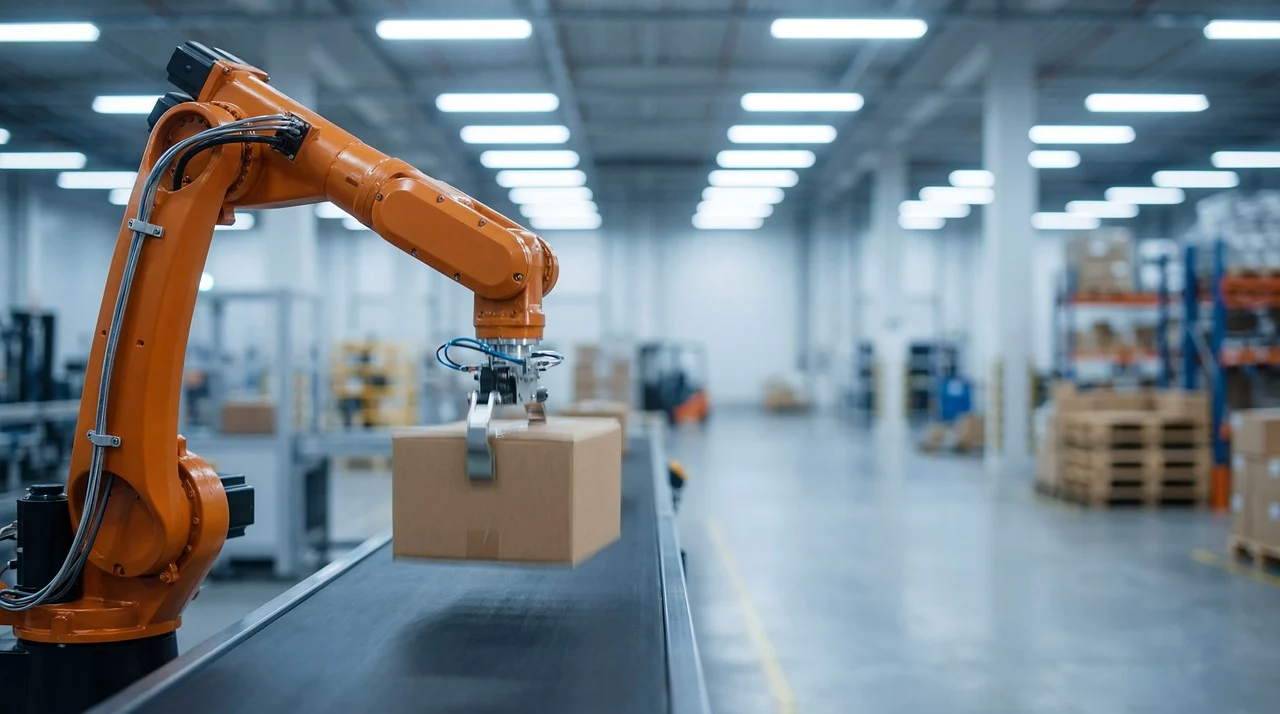
3.1 3D Vision‑Guided Depalletizing — One Robot Arm Replaces Eight Workers
In logistics automation, depalletizing and palletizing have always been among the most technically challenging tasks because:
• Cargo shapes vary enormously—from shoeboxes to refrigerator packages, including cuboids, cylinders, and irregular forms.
• Pallet patterns are unpredictable—inbound and outbound stacks are completely random and cannot be executed by fixed programs.
• Surface materials differ widely—cardboard, shrink wrap, stretch film, bubble wrap, mesh bags—each with distinct optical properties.
In June 2026, Chinese 3D vision company Lingxi Robotics demonstrated real‑world performance data for its 3D vision‑guided depalletizing system in production logistics: a single system processes 1,300 items per hour, replacing eight human workers. Deployed at SF Express, ZTO, and other logistics centers, its core capability lies in using 3D structured‑light cameras to scan pallet point clouds in real time and AI algorithms to automatically plan optimal grasping paths—even handling mixed pallets with different sizes, weights, and materials adaptively.
At the 2026 LogiMAT and MODEX international logistics trade fairs, Norwegian 3D camera manufacturer Zivid showcased seven live demos covering sorting, bin‑picking (random grasping), mixed palletizing, and depalletizing. Their 3D vision systems successfully handled transparent plastic bottles and bubble‑wrapped packages—two surface materials that traditional 3D vision (relying on reflected‑light triangulation) previously found nearly impossible to image reliably. FANUC demonstrated AI‑vision‑based "no‑code robot training"—operators merely manually placed items in the correct position a few times, and the robot autonomously learned labeling, inspection, and palletizing operations.
In practical depalletizing deployments, the collaborative "3D positioning + 2D quality inspection" approach is becoming mainstream: 3D structured‑light cameras handle spatial pose acquisition and grasping path planning, while 2D industrial cameras simultaneously perform surface quality checks—carton damage, missing labels, and incomplete sealing. This enables the robot arm to complete quality assessment during grasping, eliminating the need for secondary handling ("grasp first, inspect later"). For example, the MindVision SUA high‑resolution global‑shutter cameras can be mounted on the robot end‑effector, working alongside the 3D vision system—3D determines pose, SUA inspects quality, and a pass/fail verdict is output within a single grasp cycle, achieving integrated grasping and inspection. For logistics centers processing tens of thousands of items daily, this integrated solution eliminates a separate inspection station and its associated handling, improving overall cycle efficiency by 15–20%.
💡 Product Fit
In depalletizing, 3D cameras handle spatial positioning while 2D industrial cameras handle surface quality inspection. The MindVision SUA high‑resolution global‑shutter cameras can be deployed on the robot end‑effector, cooperating with the 3D system—3D for pose, 2D for quality—to deliver a complete "grasp‑and‑inspect" solution without a dedicated inspection station.
3.2 Conveyor Real‑Time Sorting — "Move, See, and Decide" Simultaneously
In e‑commerce order sorting centers, goods on mixed‑flow conveyors must be rapidly identified, classified, and diverted to different exits. The core requirement is to complete the three actions of "recognition + decision + trigger execution" while goods are moving, with total latency under 200 ms—beyond this threshold, diverters may send goods to the wrong chute.
Such scenarios impose a three‑dimensional balancing act on industrial cameras:
| Requirement | Reason | Typical Specification |
|---|---|---|
| High frame rate | Goods move fast (1–3 m/s) | >100 fps, global shutter preferred |
| High resolution | Coexistence of small and large items; precision cannot be compromised | 5–12 MP |
| Low‑latency transmission | Total latency from acquisition to algorithm processing to actuator action must be<200 ms | USB3.0 / GigE Vision low‑latency mode |
💡 Product Fit
In conveyor sorting, GigE interface cameras (such as the MindVision GE/GEF/GED/GEC series) offer inherent advantages of low‑latency transmission and PoE—single Ethernet cable for both data and power, simplifying field cabling. For higher‑speed sorting lines, the SUA series' high frame rate (up to 791 fps) ensures zero frame loss even at conveyor speeds above 3 m/s.
4. AGV/AMR Vision Navigation: Giving Autonomous Mobility Its Eyes
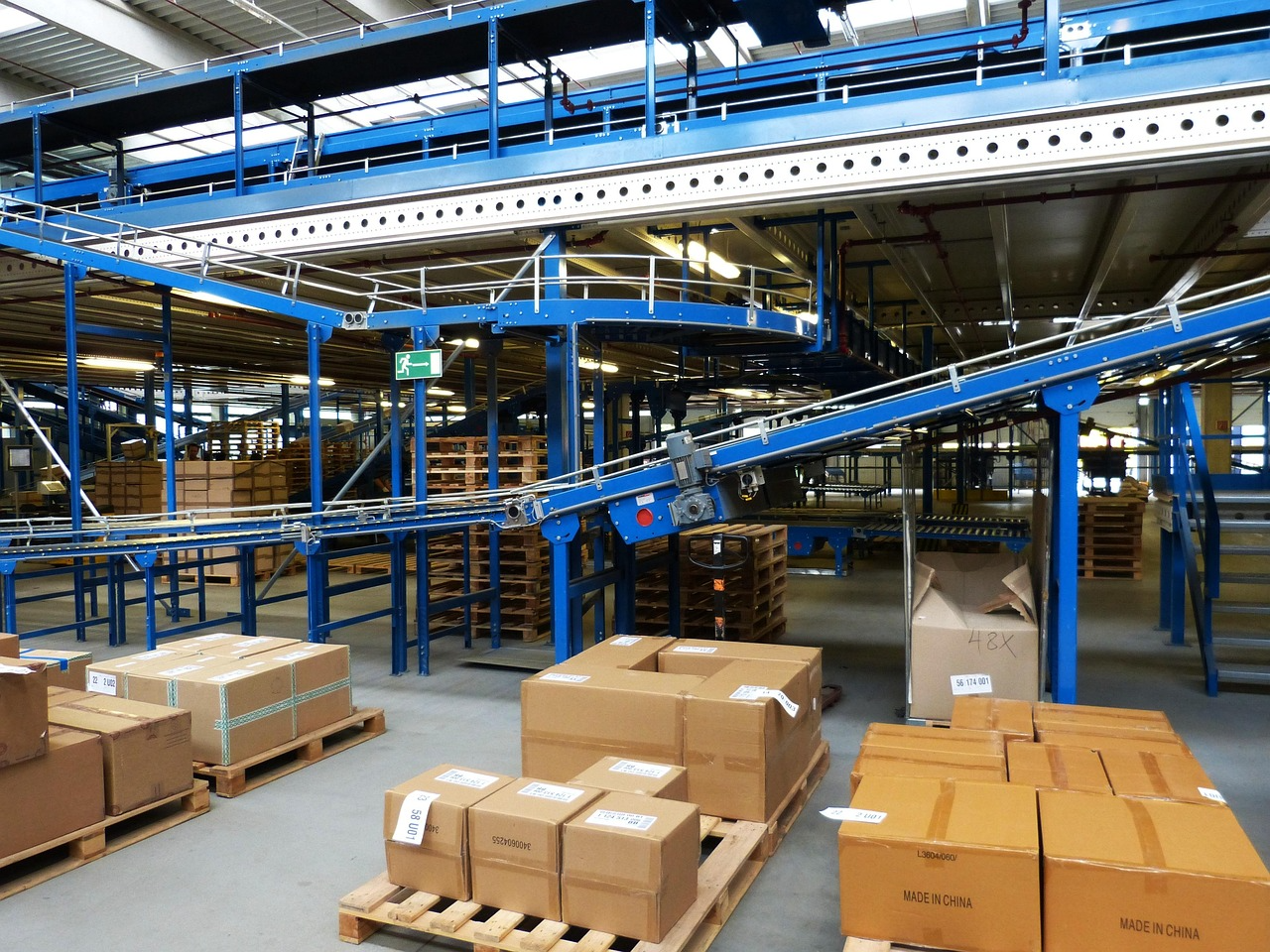
4.1 From Laser Navigation to Visual SLAM — AGV's Vision Upgrade
For the past decade, the mainstream navigation solution for warehouse AGVs has been laser SLAM (2D LiDAR)—installing reflectors or QR codes on the floor and scanning via laser. This approach is mature but shows clear shortcomings in three scenarios:
| Scenario | Laser SLAM Limitation | Visual SLAM Advantage |
|---|---|---|
| Dynamic environment | Laser only captures 2D slices; no vertical information when pedestrians/forklifts suddenly appear | Vision captures full 3D + semantic information, distinguishing "person/vehicle/goods" |
| Bright‑light warehouse | Laser produces ghosts/losses on glass curtain walls and highly reflective metal shelving | Vision sensors with HDR adapt to high dynamic range lighting |
| Missing landmarks | If reflectors/QR codes are obscured → AGV goes blind | Vision extracts natural features (pillars, shelf corners, ceiling texture) without artificial landmarks |
Visual SLAM is becoming the standard sensor configuration for next‑generation warehouse AGVs. For instance, MRDVS's 3D depth camera provides RGB images, depth maps, and IMU data simultaneously from a single sensor, operating stably under direct sunlight exceeding one million lux—critical for skylight‑lit warehouses and outdoor receiving docks.
Visual SLAM imposes extremely high demands on front‑end image sensors for frame rate and dynamic range: when an AGV moves at 2 m/s, insufficient frame rate causes feature point matching between consecutive frames to fail due to motion blur, leading to positioning loss; and the extreme contrast between skylight illumination and deep shelf shadows demands wide dynamic range (WDR)—otherwise, overexposure in bright areas and underexposure in dark areas leave SLAM algorithms unable to extract valid features. The MindVision SUA global‑shutter cameras, with frame rates up to 791 fps and WDR capability, continuously deliver motion‑blur‑free, wide‑dynamic, high‑quality image streams under AGV high‑speed movement and complex warehouse lighting, providing a stable and reliable feature extraction foundation for visual SLAM. Additionally, their global shutter ensures zero rolling distortion during high‑speed motion—critical for visual odometry that relies on inter‑frame feature matching.
💡 Product Fit
AGV visual SLAM requires high frame rate + global shutter + wide dynamic range in combination. The MindVision SUA series, with up to 791 fps global shutter, continuously outputs blur‑free, wide‑dynamic images under AGV high‑speed movement and complex warehouse lighting (skylight/shadow alternation), providing a stable feature extraction foundation for SLAM algorithms.
4.2 Miniaturized Cameras — The Silent Hero of AGV Embedded Vision
Another unique requirement for AGVs/AMRs is size and weight. Integration space on modern warehouse AGVs is extremely tight—navigation sensors, obstacle‑avoidance radar, WiFi/5G antennas, emergency stop buttons, and status indicator lights all compete for limited vehicle body space. For multi‑camera vision solutions requiring 2–4 cameras per AGV, camera dimensions directly determine whether the design is physically feasible.
The MV‑MS136 series industrial cameras exemplify a product designed specifically for such embedded scenarios:
• Dimensions: just 14×14 mm—fingernail‑sized, fitting into AGV body corners.
• Weight: under 16 g—multi‑camera deployment without burdening the AGV's power budget.
• 120 fps frame rate—sufficient for real‑time obstacle avoidance at AGV speeds up to 2 m/s.
• 12‑camera synchronization—supports surround deployment for 360° dead‑zone‑free environmental awareness.
As warehouse AGVs evolve from single‑unit operation to fleet scheduling, each AGV's environmental perception capability determines the safety and efficiency ceiling of the entire fleet. Miniaturized, high‑performance embedded industrial cameras form the foundational physical layer of this perception capability.
5. Industrial Camera Selection Guide for Warehouse Logistics
Synthesizing the requirements across the four scenarios above, here are the recommended dimensions for selecting industrial cameras for warehouse logistics automation:
| Application Scenario | Recommended Camera Type | Key Specifications | Recommended Interface | Recommended Model | Deployment Position |
|---|---|---|---|---|---|
| High‑speed flying scan | Global‑shutter area scan | >200 fps, 5–12 MP | USB3.0 / CXP | MindVision SUA series | Above/side of conveyor |
| AI label recognition | Global/rolling‑shutter area scan | 5–12 MP, adaptive exposure | GigE / USB3.0 | MindVision SUA series | Inbound scanning station |
| Volumetric measurement | 3D structured light / stereo | 0.5–2 m working distance, 0.1 mm accuracy | USB3.0 | (3D‑specific) + MindVision SUA (2D auxiliary) | Inbound measurement station |
| Depalletizing guidance | 3D structured light | 1–3 m working distance, >30 fps | GigE / USB3.0 | (3D‑specific) + MindVision SUA (quality inspection) | Robot end‑effector / overhead |
| Conveyor sorting | Global‑shutter area scan | >100 fps, 5–20 MP | GigE / USB3.0 | MindVision GE series / SUA series | Multiple stations along conveyor |
| Bin status detection | High‑resolution area scan | >12 MP, PoE power | GigE | MindVision GE series | Top of rack aisle |
| AGV vision navigation | Miniaturized area scan / stereo | <50>30 fps, wide dynamic range | USB3.0 / MIPI | MindVision SUA series / MV‑MS136 series | Around AGV body |
Three often‑overlooked engineering details in selection:
• Trigger precision: In conveyor scenarios, the camera trigger signal must be strictly synchronized with the encoder signal. Trigger jitter exceeding 0.5 ms may cause overlapping or missed frames. Industrial cameras with hardware trigger input (both MindVision SUA and GE series support this), paired with incremental encoders, are recommended for precise pulse synchronization.
• Multi‑camera networking: When deploying 4+ cameras on an AGV with independent USB connections to the host controller, cable weight and management complexity multiply. PoE‑enabled GigE cameras (such as the MindVision GE series) or MIPI‑interface embedded camera solutions (the MV‑MS136 series supports 12‑camera synchronization) significantly reduce cabling burden.
• Environmental adaptability: Warehouse temperature/humidity fluctuations, dust, and equipment vibration are silent killers for industrial cameras. For northern warehouses starting up in winter cold and southern warehouses operating through summer heat and humidity, wide‑temperature cameras (–20°C to +65°C operating range) with IP‑rated housings are recommended. The full MindVision industrial camera lineup has passed industrial‑grade temperature and humidity testing, meeting the adaptability requirements of most warehouse environments.
6. Future Outlook: The Next Step in Warehouse Logistics Visualization
6.1 Multi‑Sensor Fusion — From One Eye to an Omniscient System
Current warehouse machine vision deployments remain predominantly "single machine, single scenario"—the barcode‑reading camera does not handle volume measurement, and the depalletizing 3D camera does not participate in path planning. However, the industry is clearly moving toward global perception fusion: networking all vision sensors distributed across inbound docks, shelving, conveyors, AGVs, and robot arms to build a real‑time 3D digital twin of the warehouse. Every item's position, orientation, and status—every device's speed, trajectory, and remaining battery—all fused and presented in a unified coordinate system.
6.2 Edge AI Lightweighting — From "Camera Takes Photo, AI Analyzes" to "Camera IS AI"
As demonstrated by IDS's AI Label Reader, the future trend is not "camera captures image → transmits to server → AI inference → returns result," but completing inference directly at the camera or frame grabber end—outputting only structured results ("Label content: Order #24601") rather than raw video streams. This brings two direct benefits: bandwidth requirements reduced by over 90%, and end‑to‑end latency compressed to milliseconds. For latency‑sensitive scenarios like AGV obstacle avoidance and robot arm real‑time grasping, edge AI is the only viable path.
Conclusion
Warehouse logistics automation is transitioning from "hard automation" (conveyors, stacker cranes, sorters) to "soft‑hard fusion" (visual perception + AI decision‑making + automated execution), and industrial cameras are the most critical perception layer in this transformation. From inbound code reading to outbound palletizing, from shelf inspection to AGV navigation—vision is becoming the warehouse's "central nervous system," and industrial cameras are the sensory nerve endings at its forefront.
Whether it is 3,000 items per hour in high‑speed flying scan, 14×14 mm AGV embedded vision, millimeter‑level 3D volumetric measurement, or 1,300 items per hour in intelligent depalletizing—behind every scenario is an industrial camera precisely matched to its unique requirements, working silently. Choosing the right camera is not about picking the most expensive specifications, but about selecting the "eyes" that best understand what the scenario truly demands.
Explore MindVision's full industrial camera lineup and find the right solution for your production line.
We’ll be glad to help you
Please Login
Full Name
Company Name
E-mail*
Country / Region
Your Needs / Application*
Verification code

Get in touch
Name*
E-mail*
Country*
Your Needs / Application*
